






It may have been 25 years since Rufus McClure last stood in front of a classroom, but his 50-plus years as a high school English teacher still shows when he speaks.
“Teaching was never a burden, always a pleasure … gladly would I learn, and gladly teach,” said McClure, quoting Geoffrey Chaucer’s description of the Oxford Clerk from “The Canterbury Tales.”
In his 100 years of life, McClure has certainly done his fair share of both learning and teaching.
Like most members of his generation, McClure learned the value of sacrifice and hard work at a young age. He was born September 24, 1925, in Hazelwood, N.C., and lived through the lean years of the Great Depression. His father worked in a furniture factory, and the family moved several times because jobs were hard to come by. McClure became a paperboy at 13, completing his route on foot until he saved enough money to buy a bike.
“It was tough, we were poor,” said McClure, recalling the small towns he grew up in. “It was a time when country living was still country living – it had not been citified. Roads were dirt and mud, houses were old-fashioned frame houses, nothing fancy.”
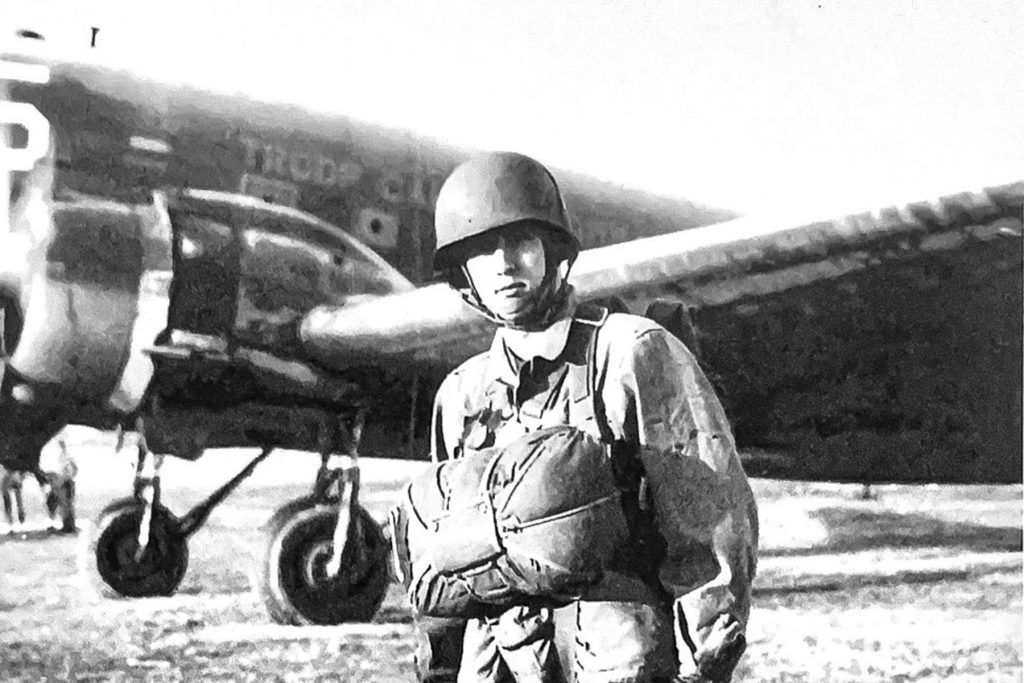
At 18, McClure was drafted into the United States Army, where he volunteered as a paratrooper and graduated from jump school, training for the invasion of Japan with the 13th Airborne Division. After the Battle of the Bulge, he was shipped to Europe to join the 82nd Airborne Division, where he helped liberate the Wöbbelin concentration camp.
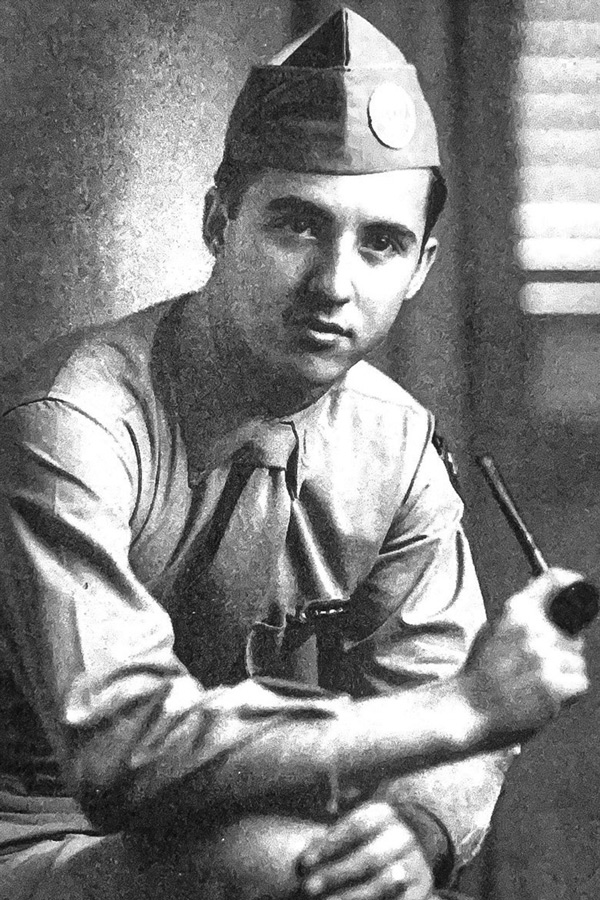
After the Allied victory in Europe, he boarded a ship in France destined for the Pacific for the invasion of Japan. When Japan surrendered to the Allies, McClure’s ship changed course and returned to a jubilant New York City, around the same time Life photographer Alfred Eisenstaedt snapped his iconic “Unconditional Surrender” photo of a Navy sailor kissing a nurse in Times Square.
McClure was awarded the American Campaign Medal, European-African-Middle Eastern (EAME) Campaign Medal, Bronze Service Star, Good Conduct Medal, and the World War II Victory Medal. Most importantly, he qualified for the G.I. Bill, which allowed him to do something he never imagined he would do: attend college. He enrolled at Appalachian State University completely free of cost and even received a stipend.
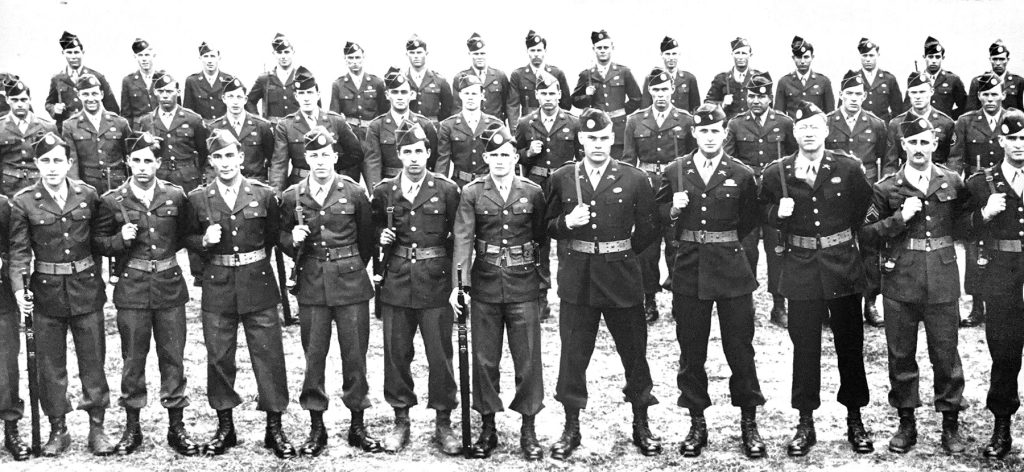
“College was fun, it was sort of a three-year holiday,” said McClure.
He found the predominantly female campus at App State to be a pleasant change of pace after his years in the military, but what McClure loved most were his English classes, which instilled in him an enduring love for literature.
After graduation, he looked to Florida, where he had developed an affinity for the St. Johns River and the beaches of the First Coast during his time stationed at Camp Blanding.
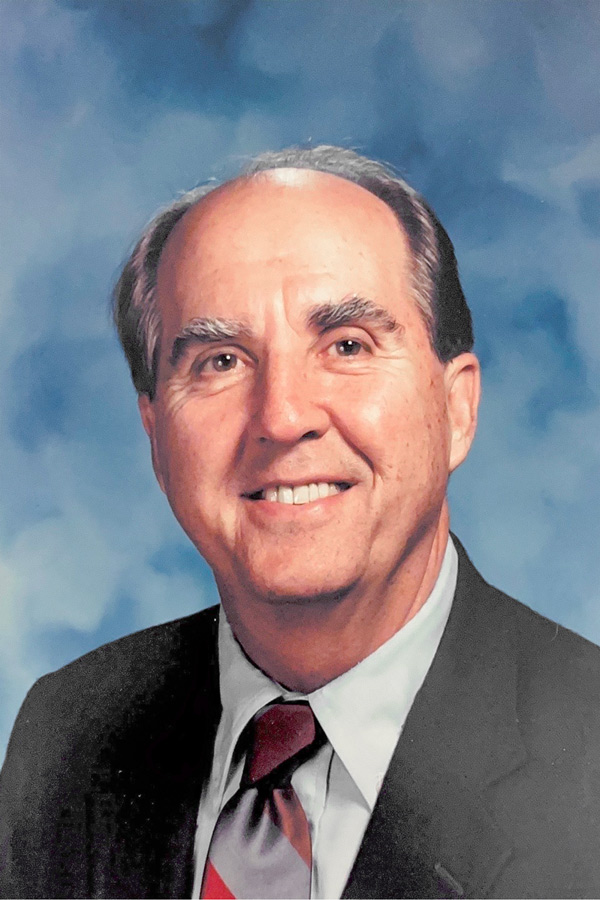
McClure earned a job as an English teacher at The Bolles School in 1951, the same year “The Catcher in the Rye” was published. He started out with a $2,200 salary and lived on campus as a dorm proctor.
Bolles was an all-boys military academy in those days, and McClure was also responsible for leading students in military drills.
He originally planned to return to school after two or three years and obtain his doctorate so he could become a college professor. That never happened, however, because McClure met a young woman who was taking lessons from a Bolles music teacher.
Mariam Akra’s parents had emigrated from Lebanon and started Akra Brothers Department Store at 1735 Main Street. McClure and Mariam were wed at Assumption Catholic Church on January 6, 1956, and remained happily married until she passed away a week shy of the couple’s 66th wedding anniversary.
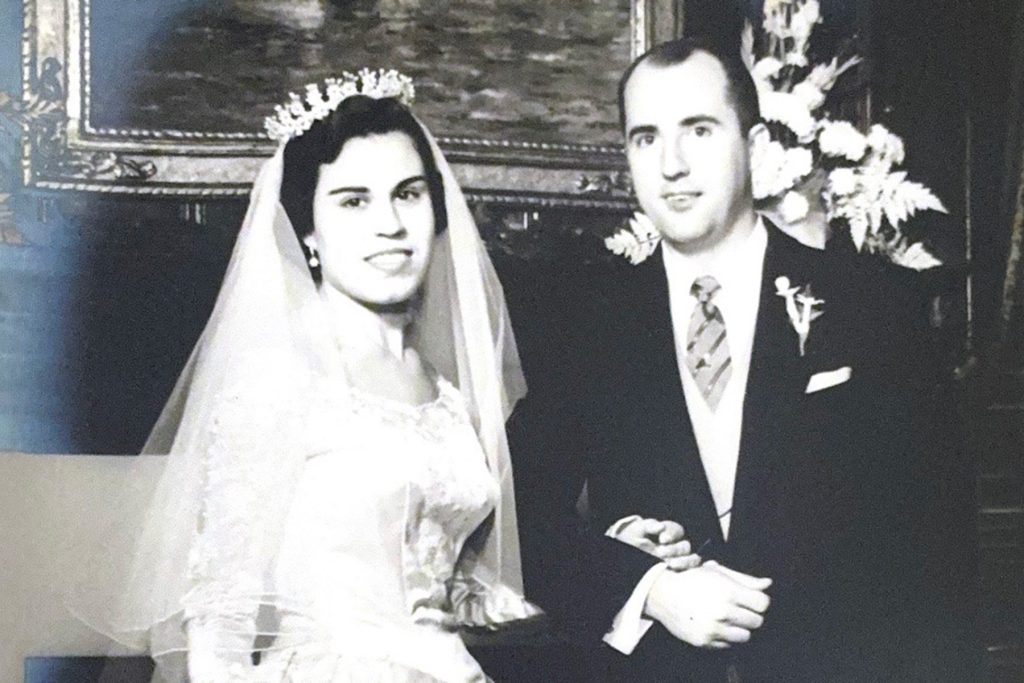
“We spent a long, happy romantic life together, which I still think about,” said McClure, taking a difficult pause before finally finishing his thought, “Every night.”
In their many happy years together, McClure enjoyed taking his wife and their three children on lengthy summer camping trips during his month off. The family purchased one of 750,000 station wagons manufactured by Pontiac in the two decades after World War II. McClure’s daughter Maura, who herself spent decades as an English teacher, remembers camping in more than 40 states and visiting national parks all over the U.S. and Canada.
The Bolles School gave McClure a job and his wife, and he gave back much in return. He helped transition Bolles from a military academy to private boys’ school in 1962 and then to a coeducational institution in 1971, helped create the fine arts program, and even wrote two books chronicling Bolles’ history. When he retired in 2000, a convocation was held so McClure could deliver a farewell speech, which drew two standing ovations.
His retirement lasted all of two years, however, with McClure unretiring and returning to Bolles in a consultant capacity in 2002. After the devastating Hendricks Avenue Baptist Church fire in 2007, McClure had Bolles art teacher Jim Smith sculpt “The Phoenix” using the soundboard from the church’s burned grand piano. The sculpture was placed outside the music school, which is fitting considering it was the school’s music teacher who was responsible for McClure meeting his wife all those years ago.
For decades, McClure has resided in San Marco and San Jose, where many of his former students still live. He has enjoyed habitually walking bridges downtown since 1998. He celebrated his 97th, 98th and 99th birthdays by walking the entire length of the Acosta Bridge – 1,645 feet – with his family and friends. His father-in-law, Philip Akra, had participated in the dedication of the Acosta Bridge when it was first built and helped cut the ribbon on the opening day.
Earlier this year, McClure was again joined by his family as he was honored in the end zone at EverBank Stadium as the Veteran of the Game during the Jaguars’ regular season finale. He has seven grandchildren and five great-grandchildren. He was also recently interviewed for a documentary profiling four World War II veterans, which premiered at World Golf Village in late May.
Even at his age, McClure says he is still learning.
“I’m learning how the world turns, I’ve watched it spin now for 100 years, and with every turn I’ve absorbed a detail or two,” said McClure.