


While it may not have been easy at first to gather a group of citizens for the purpose of protecting waterways, the St. Johns Riverkeeper is celebrating 25 years of doing just that.
“We had a huge discussion about the daunting task of trying to (protect) a 310-mile river,” said Dr. Quinton White, founding board member of the St. Johns Riverkeeper. “That fact that it was so different, so diverse and what a challenge that would be. The strategy we came up with at the time was to focus on the lower basin. Then we could grow and expand when we had the time and resources.”
The St. Johns Riverkeeper was created in 2000 to defend the river and its tributaries, and advocate for the protection of the watershed. It was a time when the waterway was receiving national recognition, as it was designated an American Heritage River in 1998 by President Bill Clinton. This special attention generated enough interest to pursue three objectives: natural resource and environmental protection, economic revitalization and historic and cultural preservation.
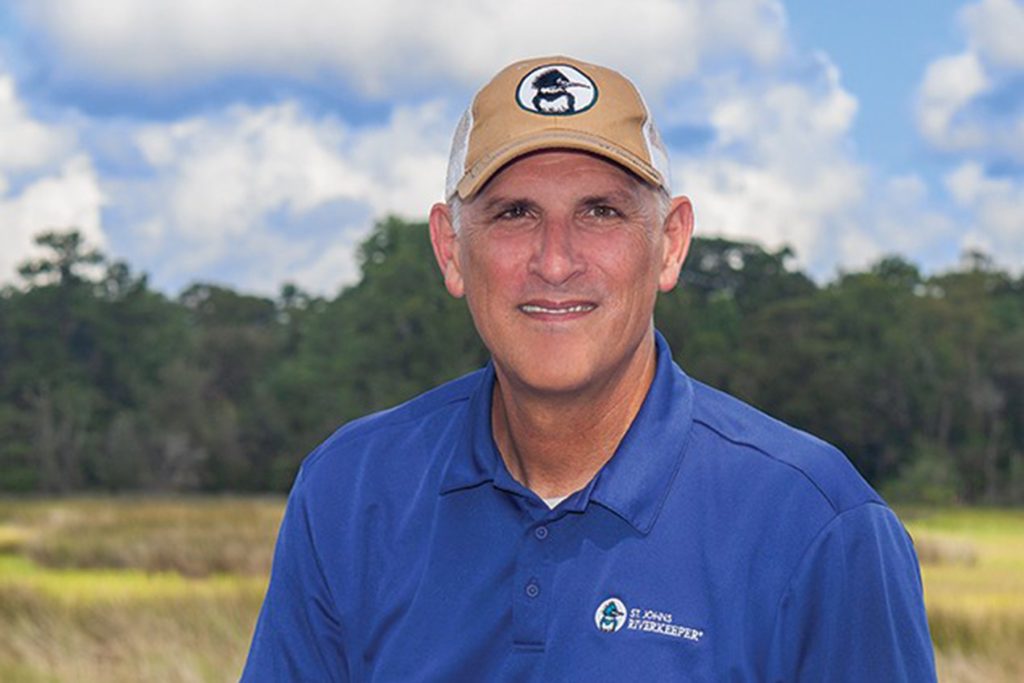
“The river can really be a galvanizing force for Jacksonville, because everyone wants to protect the river,” said Jimmy Orth, executive director of the St. Johns Riverkeeper. “It’s how that is done that causes a difference of opinion.”
The Riverkeeper
Lisa Rinaman is the third Riverkeeper in the organization’s history and was familiar with the organization before she was hired in February 2012. She was policy advisor to both Jacksonville Mayors John Delaney and John Peyton. Her work at City Hall included efforts to develop and implement irrigation, fertilizer and Florida-friendly landscaping ordinances to protect the St. Johns River and local waterways.
“The river is a huge equation, and it is always evolving, so the way we do our work is also always evolving,” said Rinaman. “The best thing you can do is surround yourself with smart people who are dedicated, continuously learning and follow the pathway.”
The organization sought her out for her policymaking and consensus-building abilities she exhibited at the mayor’s office.
“She didn’t have the science background, but our relationship with Jacksonville University and the professors and scientists we worked with there gave us the access to the science,” said Orth. “We realized what we needed was somebody with a policy background that could help us figure out how to take the science and advocate for the policy. It’s the policy that is ultimately going to protect the river.”
Rinaman was preceded by Neil Armingeon, who was hired in February 2003. Dubbed “The Father of the River,” the Alabama native brought along a master’s in environmental management from Duke, training as an ecologist and hydrologist and his trademark white goatee to his new post. Prior to arriving in Jacksonville, he worked for 10 years in Louisiana as the Lake Pontchartrain Basin Foundation environmental director after serving as the project director for the North Carolina Coastal Federation. He brought the knowledge, passion and voice the organization needed to address issues as a conservation entity.
“Neil Armingeon had a more aggressive approach and was much more outspoken on issues. That was good for us because some of the problems required that we stay on top of some of the agencies to make sure the issues would get resolved,” said Orth.
Mike Hollingsworth was the first St. Johns Riverkeeper. He was hired in 2001 and the young organization looked to lean on his experience from working for the Florida Department of Environmental Protection.
“When we started out, we hired Mike Hollingsworth because he had work with DEP and had a good working relationship with them. He was not confrontational and that worked well for us as we worked to gain the respect and trust of the community,” said Orth.
Restore the Ocklawaha
Collaboration has been the key to the latest progress on an issue that the organization has had on its radar since its inception: restoring the Ocklawaha River. The Rodman Dam, renamed the Rodman-Kirkpatrick Dam in 1998, was part of the Cross Florida Barge Canal project to provide a shipping route across Florida. The dam cut off the free flow of the Ocklawaha River when it began service in 1968 and created the Rodman Reservoir, located about 15 miles southwest of Palatka. The project was canceled by executive order by President Richard Nixon in 1971.
“We made a conscious decision at the time not to deal with the Ocklawaha,” said White. “It was a very controversial topic and there was a lot of opposition to (restoring the river). We will wait to deal with that at another time. It seems like now is the time for that topic to come up.”
The debate over the dam has continued to this day with two main points of view. One group wants to preserve the reservoir for its plentiful bass fishing and recreational opportunities. The other side of the argument is in favor of partial removal of the dam to restore the natural flow of the Ocklawaha River to improve its health as well as that of the St. Johns and Silver rivers.
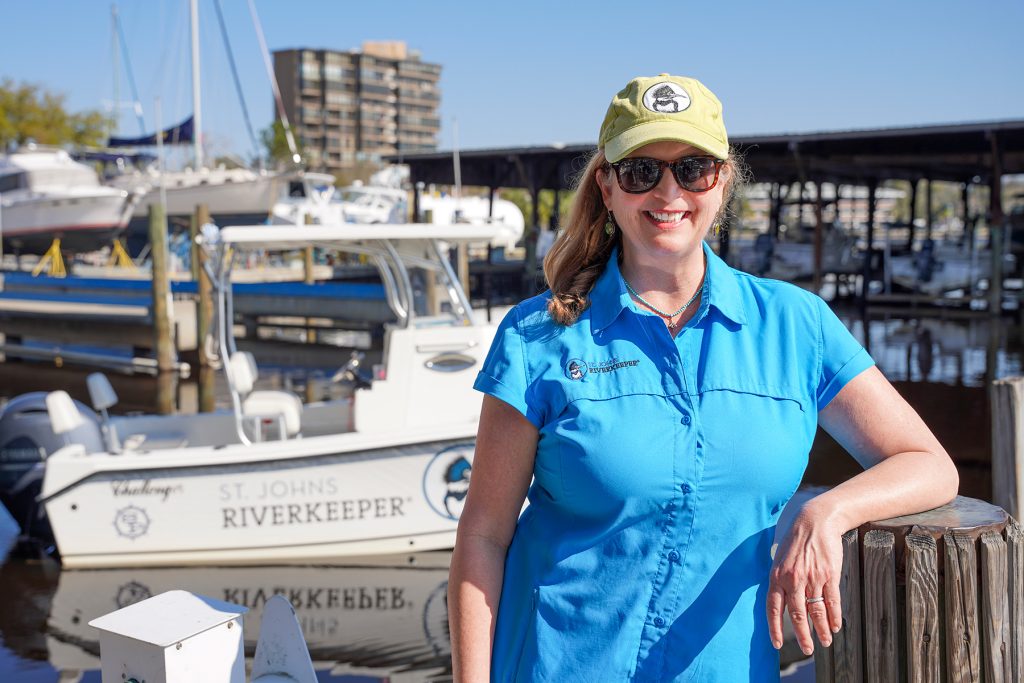
“We are working with Reunite the Rivers, a coalition founded in 2019, to bring business owners, nonprofits and citizens together who are interested in restoring Florida’s great riverways system,” said Rinaman. “We are collecting and providing the latest and greatest science that’s available and reaching out to find the best ways to bring all the counties located in this watershed together to support this effort.”
“Every single day that the (Rodman/Kirkpatrick) dam is in place, it’s harming the St. Johns River,” said Rinaman.
The St. Johns Riverkeeper and its partners received some good news regarding this debate during the latest Florida Legislative cycle: The State’s 2025-26 budget proposal included $6.25 million in funding for the Florida Department of Environmental Protection to develop a plan for the restoration of the Ocklawaha River. . The organization’s joy was short-lived, though, as Governor Ron DeSantis exercised his line-item veto power to eliminate the project before approving the budget. It was part of the $576 million in funding cut from the budget by the Governor.
“I feel like we have made progress. I am disappointed about the veto, but that’s closer than we have ever come to getting it passed,” said Bud Para, vice chair of the board of
the St. Johns River Keeper. “The Legislature supported it,
so we will keep trying.”
SAVe Our River’s Grasses expeditions
While the St. Johns Riverkeeper and its partners regroup to continue the pursuit of restoring the Ocklawaha, the local organization continues to deploy different tools to study and protect the river and its tributaries.
Submerged Aquatic Vegetation(SAV) has been a good barometer for the health of the river as it acts as its kidneys;
as such, the Riverkeeper has prioritized its study and protection. One of the first problems the Riverkeeper noticed affecting the loss of underwater grass was saltwater intrusion.
“Over the years we’ve seen more saltwater go further and further upriver due to more than 100 years of dredging of the St. Johns to accommodate larger ships traveling to our ports,” said Rinaman “The widening and deepening of the St. Johns River has contributed to more than doubling the tide range of the river. This gives the Atlantic Ocean more tidal force to push salt water deeper into the St. Johns and contribute to reduction of grasses down the river.”
In 2017, this river environment, coupled with the destructive path of Hurricane Irma, contributed to the significant decline of SAV. The Riverkeeper responded with the creation of the “SAVe Our River’s Grasses” expeditions in 2023. It is a five-year plan to travel the river by boat to study 14 sites along an 80-mile stretch of the river between Doctors Lake in Clay County and Lake George in Putnam County.
“We launched SAVe Our River’s Grasses expeditions to try to build on the data that already exists but also go out in the community and meet with fishermen, homeowners, elected officials, scientists and river enthusiasts to collect our own data to not only look at the grasses, but also look at water quality at the same site,” said Rinaman.
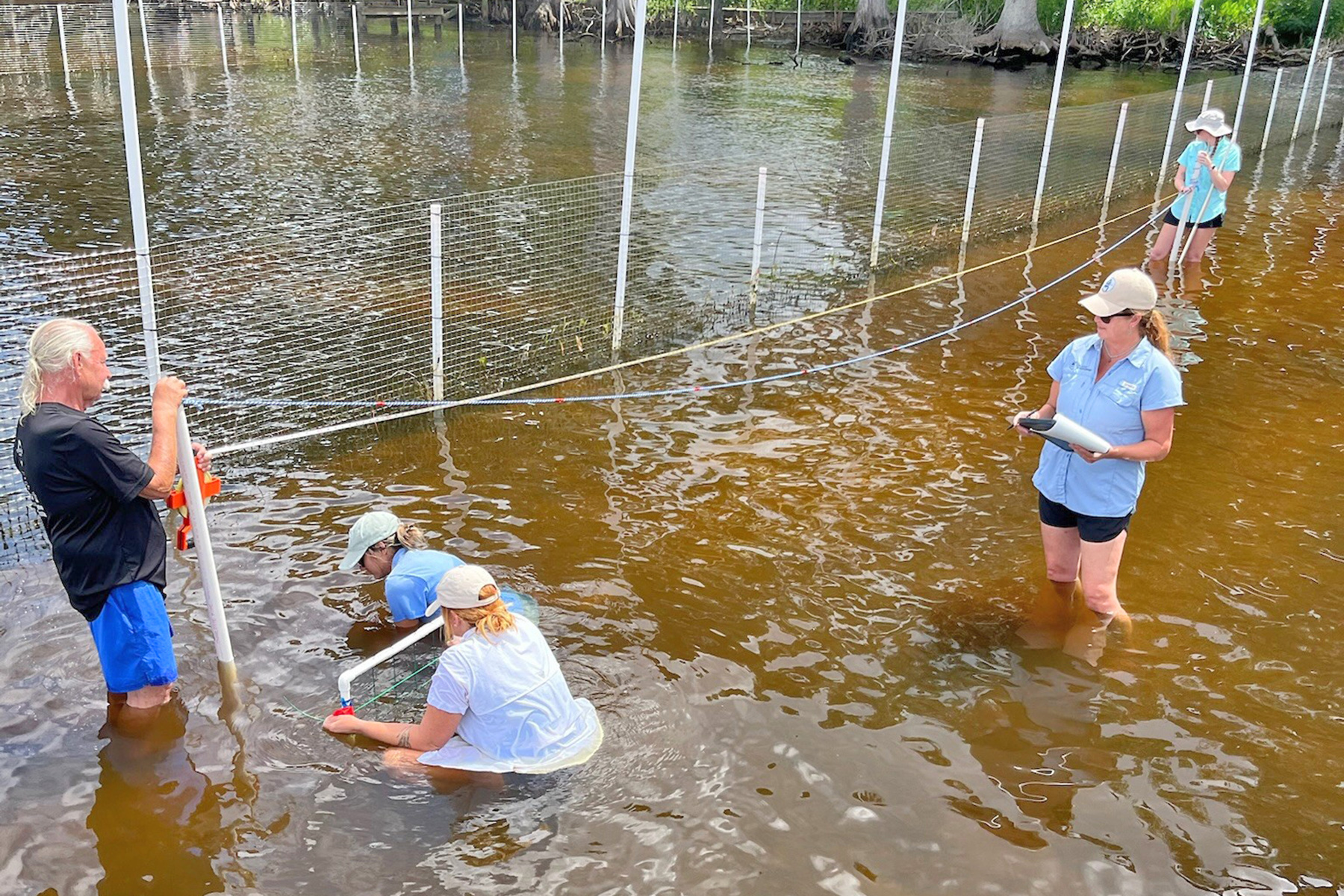
The Riverkeeper identifies different types of grasses and measures them for length, width, height of the bed, and density. It also examines the water’s salinity and oxygen levels and turbidity.
“We look at these factors in real time and compare them to historical records as well as two years of our own data,” said Rinaman. “Right now, there is no silver bullet (to fix the growth of the grasses). We are seeing grasses come back, but it’s taking longer than it has before.”
The slow regeneration of grasses is partly attributed to Irma and the high, dark waters that follow destructive storms, said Rinaman, which limit sunlight to the vegetation and slow its growth. The Riverkeeper has also observed that the tops of the grass are often jagged as a result of grazing.
“We are seeing bite marks, so we have evidence of grazing pressure….manatees, turtles, fish and other wildlife disturb the grasses. They basically eat it down to the (stems) before it can regenerate,” said Rinaman.
Part of the SAVe Our River’s Grasses expeditions is installing temporary fences around grass beds that are growing back to protect them from overgrazing and give
them a chance to grow and regenerate. Once the bed is healthy, the fence can be moved to another section.
“How do we bring the grasses back? It’s a multi-pronged approach to reduce stress on the grasses, improving water quality, and doing everything we can to offset the saltwater intrusion,” said Rinaman. “Also doing anything we can to prevent additional stress to the river. Looking at permits, or anything to stop additional harm on top of this unsustainable position the river is currently in.”