




When Dexter’s Law (Florida House Bill 255) and Trooper’s Law (Florida Senate Bill 150) were unanimously passed in 2025 to define animal abuse better, they also significantly increased the punishment of animal cruelty offenses. Now, a third bill, unanimously passed in March – Florida House Bill 559 – will further expand and tighten that safety net. This bill adds a new third-degree felony charge for adults who commit aggravated animal cruelty: fighting/baiting animals, sexual activities involving animals, offenses committed in the presence of children, coercing or forcing a minor to commit animal abuse. Governor Ron DeSantis was poised to sign this third bill at press time.
Extreme animal abuse crimes in Jacksonville and elsewhere in Florida from 2024 to early 2026 shocked citizens, law enforcement and the animal welfare community. The lasting impact of the heartbreaking stories of those dogs is memorialized in the tougher abuse laws named for them: Dexter’s Law (FL House Bill 255) and Trooper’s Law (FL Senate Bill 599). DeSantis announced that criminal animal abuse in Florida carries a third-degree felony charge, now punishable by higher fines and longer imprisonment.
“…Those horrifying instances of animal cruelty demand a stronger response,” DeSantis said. “Florida stands by man’s best friend to prosecute those who are derelict in their duty to take care of their own pets.”
Although these laws were not enacted in time to save all the dogs mentioned above, or to punish their abusers in proportion to their crimes, state legislators acted decisively. They amended the previous, inadequate statutes to ensure that Florida animal cruelty crimes can no longer go uncharged, be charged but then dismissed, or receive “a slap on the wrist,” as Jacksonville’s CBS 47/Fox 30 reported.
Dexter’s Law established three legal milestones for animal abuse crimes: a 1.25-point sentencing multiplier that increases sentences; elimination of record sealing or expungement to ensure a permanent criminal record; and the creation of the first Florida Department of Law Enforcement (FDLE) Aggravated Animal Cruelty Registry.
The registry is a public, searchable abuser database of anyone who enters a plea or is convicted of animal abuse in Florida; it initially listed more than 2,000 offenders. The registry includes abusers’ names, aliases, birthdays, counties of conviction, additional personal information and booking photos. The registry prevents Florida offenders from adopting or purchasing pets, or remaining anonymous to the public and flying under the radar of law enforcement.
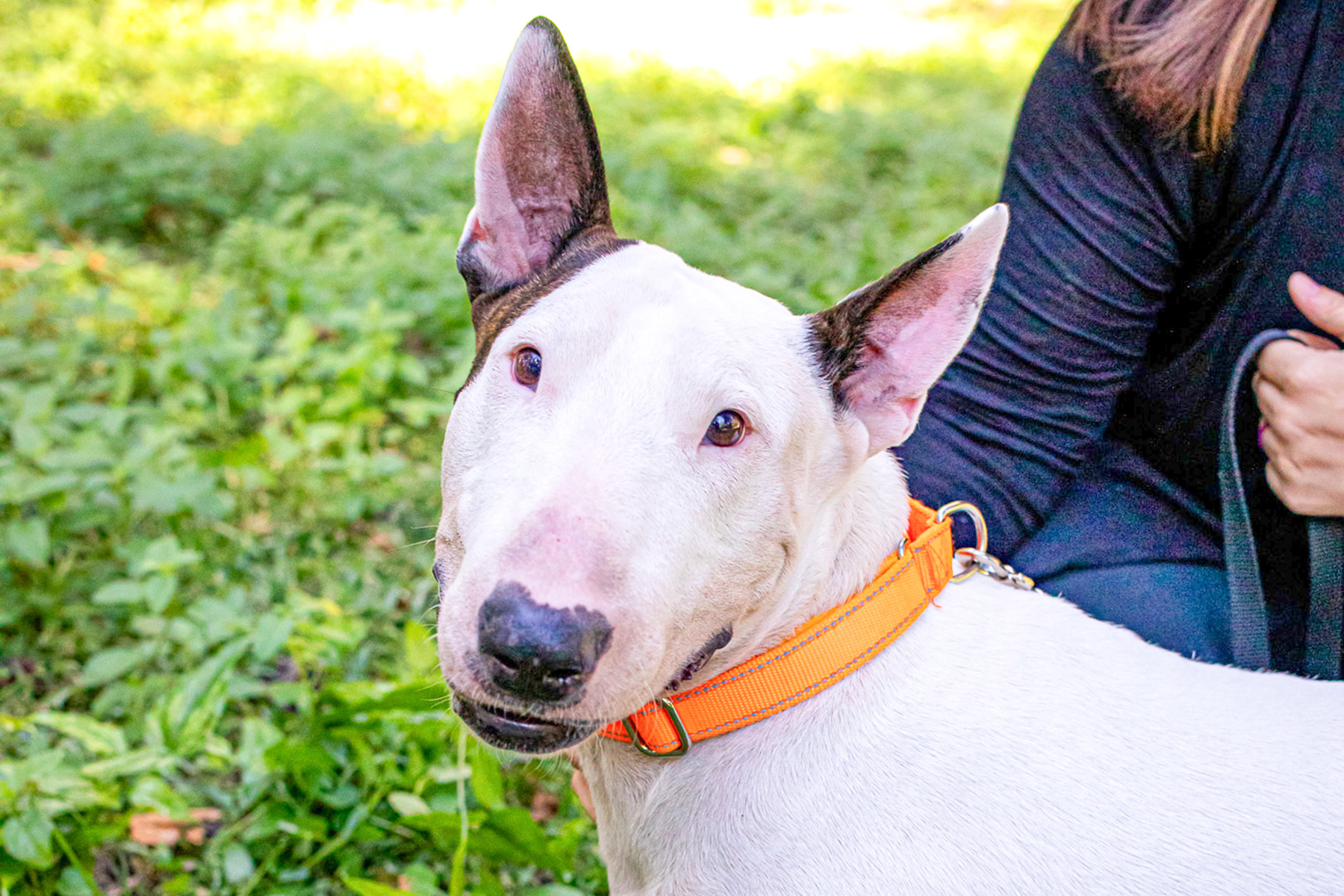
While Trooper, a white-with-gray bull terrier, survived his abuser, Dexter did not.
Trooper was left chained to a fence on I-75 in rising floodwater up to his chest, as Category 4 Hurricane Milton approached Florida. Florida Highway Patrol Officer Orlando Morales rescued Trooper when he spotted him on Oct. 9, 2024. Morales named the terrified dog Trooper, whose story went viral and received national media coverage on CBS News. Owner Giovanny Aldama Garcia was arrested on aggravated felony animal cruelty charges, but those charges were dropped, sparking public outrage.
Leon County Humane Society cared for Trooper until he was adopted by one of the 400 families who applied for him. Frank and Carla Spina saw Trooper’s story in the news and submitted an application, hoping that their long experience with bull terriers and their rescued female bull terrier, Dallas, would help. Humane Society staff agreed, which led to the family’s seven-hour trip to officially adopt Trooper.
Dexter’s story, which began so happily with his adoption from the Pinellas County Animal Services shelter in May 2024, quickly ended with the horrific discovery of his body. Dexter was a four-year-old, black and white bulldog mix savagely killed by Domingo R. Rodriguez shortly after being adopted from the animal shelter. Rodriguez was convicted in February 2025 and sentenced to the maximum penalties at that time: one year and 60 days in prison, a $5,000 fine and court costs.
Dexter’s Law
Dexter’s Law increases penalties for severe animal cruelty, such as intentional torture or killing, with a mandatory fine of up to $2,500, up to five years imprisonment and mandatory counseling to include anger management. Dexter’s Law also includes a 1.25-point sentencing multiplier that can significantly increase prison sentences.
Trooper’s Law
The legislature unanimously passed Trooper’s Law, which went into effect in October 2025, making it a third-degree felony to restrain and abandon a dog outdoors during a disaster – hurricane, flood, wildfire, or evacuation. This felony is punishable by up to five years’ imprisonment and a fine of up to $10,000.00.
Unfortunately, Jacksonville has had its own severe animal abuse cases. In January 2026, senior dog Tristan was found critically injured, dumped in a Westside park near Jacksonville Heights Elementary School. This case of deliberate violence has led to a $3,000 reward for any anonymous tip that leads to an arrest in Tristan’s case.
Two late 2025 animal abuse cases also resulted in the suffering and death of two local dogs, according to Animal Care and Protective Services Chief Michael Bricker. Miracle was a Great Dane (called Oak by its owner) that was found severely emaciated on the side of a road. Rescued and taken to ACPS, Miracle died despite all efforts by veterinarians. ACPS offered an $8,000 reward, thanks to an anonymous donation. A Crime Stopper’s tip led to felony animal cruelty charges against Dawn Lipford. Lipford was arrested and jailed.
Valor was a blue and white pit bull puppy found in San Marco, tied to a tree and shot multiple times. The crime scene was by a pond near Emerson and Hendricks Avenue. There is a $3,000 reward for any tip reported to Crime Stoppers that results in an arrest of the person or persons responsible for Valor’s abuse and death.
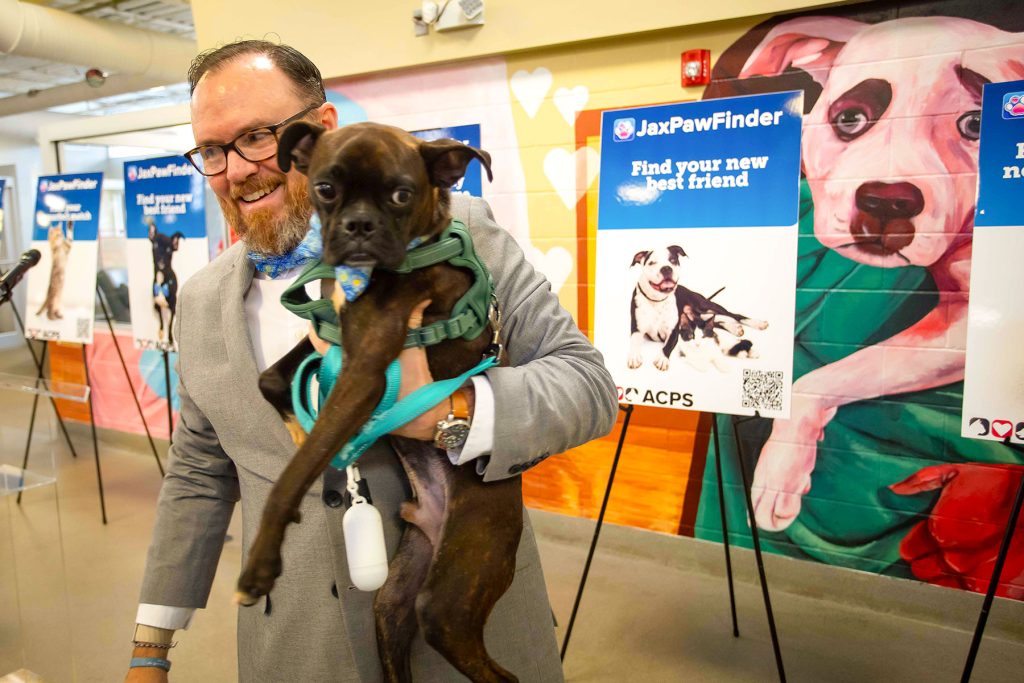
In December 2025, a new partnership between ACPS and First Coast Crime Stoppers was created to expand and promote the investigation of animal cruelty cases. Working in partnership, the two organizations offer cash rewards for tips that lead to an arrest.
The Jacksonville Sheriff’s Office (JSO) and ACPS are actively publicizing the new laws and abuser registry. They urge the public to help bring offenders to justice by reporting animal abuse, neglect, or abandonment.
Bricker urges citizens to report any information about animal abuse cases to the First Coast Crime Stopper’s Hotline: (866) 845-8477 (TIPS). Tips can also be texted to **TIPS or reported online at www.FCCrimeStoppers.com. For animal emergencies, contact ACPS at (904) 630-2489.
For after-hours assistance, call the JSO non-emergency number at (904) 630-0500.