



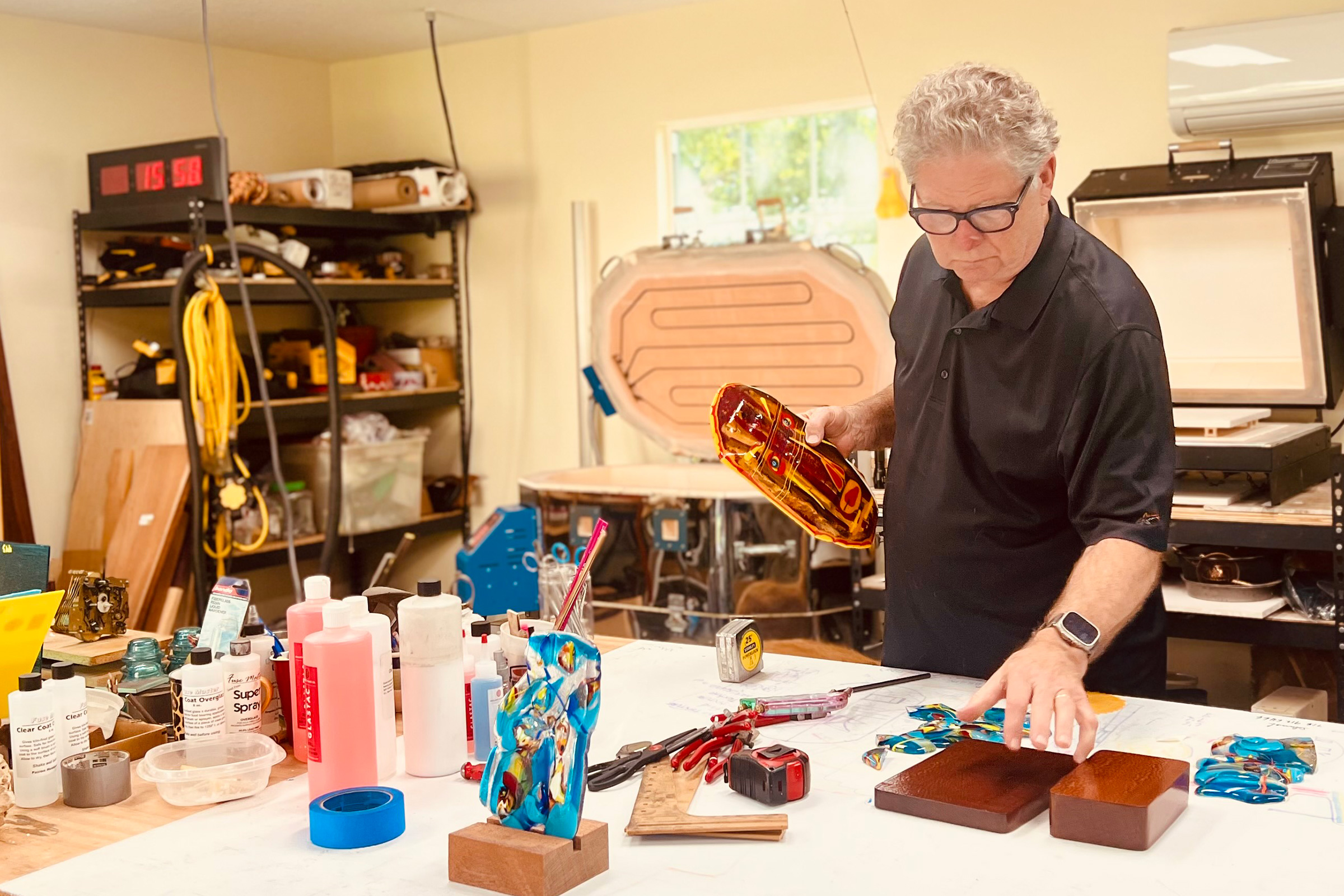
Mike Wodrich has always been an artist in his heart, but not always in practice. In fact, he practiced something quite different during his 45-year-long career as a lawyer. Now that he’s retired, however, he has been focusing on creating his artwork full time.
“It’s so different in the means of thinking and different in the approach,” Wodrich said. “You get to go off in tangents and research what you want and then figure out how that is going to be made into a tangible means of expression.”
Wodrich grew up in Miami and moved to Gainesville to earn a degree in anthropology from the University of Florida. He then earned his law degree and moved to Jacksonville to work for Rogers Towers, where he worked for 40 years before becoming general counsel and vice president at Stellar. He retired five years later.
“I knew it was time to stop,” Wodrich said. “I decided I needed to have all my energy, my brain power devoted to the development of my art.”
He had been making art part time, but once he retired, he decided to dive in with the exact same enthusiasm he had for his career.
“It was a refreshing change from the practice of law,” Wodrich said. “You go from a mindset of working in a team toward a goal that involved a client or a case or business transaction. It was fun, but it’s a hard way to make a good living.”
His current medium, fused glass, developed from his work with stained glass.
“[Stained glass] didn’t do nearly what I wanted…” Wodrich said. “Everything I do now is a sculpture that involves glass.”
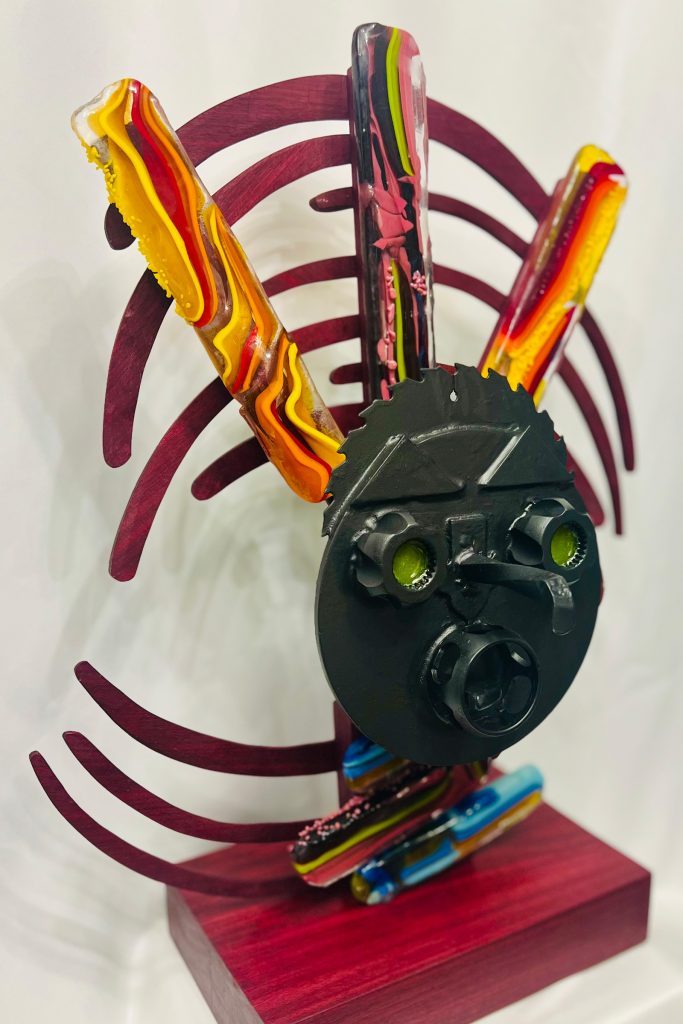
He now works as a glass artist and sculptor out of his studio in San Marco. He mostly works in three-dimensional sculptures and has been doing that full-time for about five years. He works with glass, steel, stone, wood, ceramics and objects he finds at thrift stores and vintage shops. Every piece tells a unique story, whether it’s made entirely from glass or incorporates a base as well.
Wodrich incorporates a lot of his anthropology background into his pieces. For some pieces, he looks into different ways that different cultures do things and how they adapt those practices. A lot of his pieces have masks or faces because he believes it’s always better to take an idea and animate it with a face, because then people can identify it. He does not restrict himself to one area of study, though: He built another collection of pieces around cognitive psychology while a different piece juxtaposes forming one’s own personal religion with institutional religion.
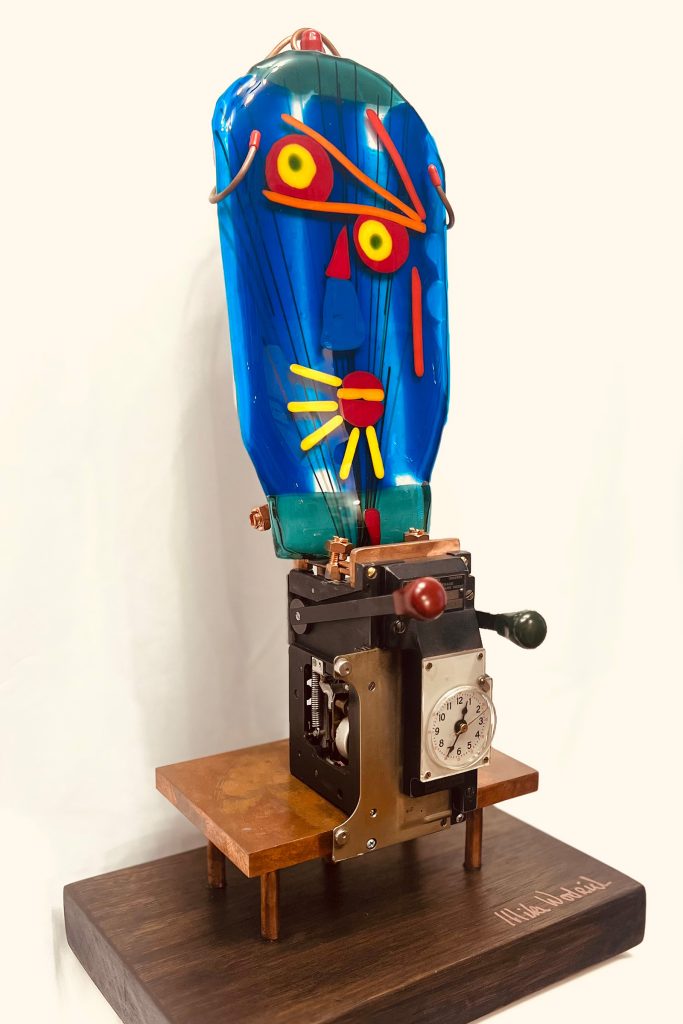
Another piece centered around people’s ability to form their own personal religion that is separate from institutional religion.
No matter the field he’s drawing from for his artwork, he said he has to start with its title.
“I must have my idea first and the name,” Wodrich said. “I can’t name it afterward.”
Where law is, by necessity, more structured and precise, creating art allows him the complete freedom to do whatever he wants and say whatever he wants through his medium. It doesn’t have to work toward a final goal either, he added.
He makes his artwork for himself and if someone else is able to see something in it, well then that makes him happy too.
“No one makes art to sit in a closet,” he said. “And the viewer completes the piece. Without a viewer, you don’t have a piece of art.”
Wodrich does take some commissions, but the parameters can’t be too specific. He only needs to know how big they want the piece, where they plan to display it and if they want a specific color of glass incorporated.
“They can’t tell me the name, subject matter or configuration,” he said. “I can’t work that way. And everything’s up for interpretation.”
In his artwork, he works with masonry in creating the bases, welds steel and has two different sizes of kilns for fusing and curing the glass.
“It embodies all those crafts,” he added.
He only works on three or four pieces at a time and once a piece reaches a particular stage, he focuses entirely on that one piece, though not every project is a success: He has boxes around his studio of unfinished projects or broken pieces.
“Glass is a funny substance,” Wodrich said. “It is liquid part of the time and solid most of the time. And it’s the transition between liquid and solid and solid back to liquid that is dangerous to the glass itself. If it’s not done correctly, it’ll break, or it’ll have internal stress.”
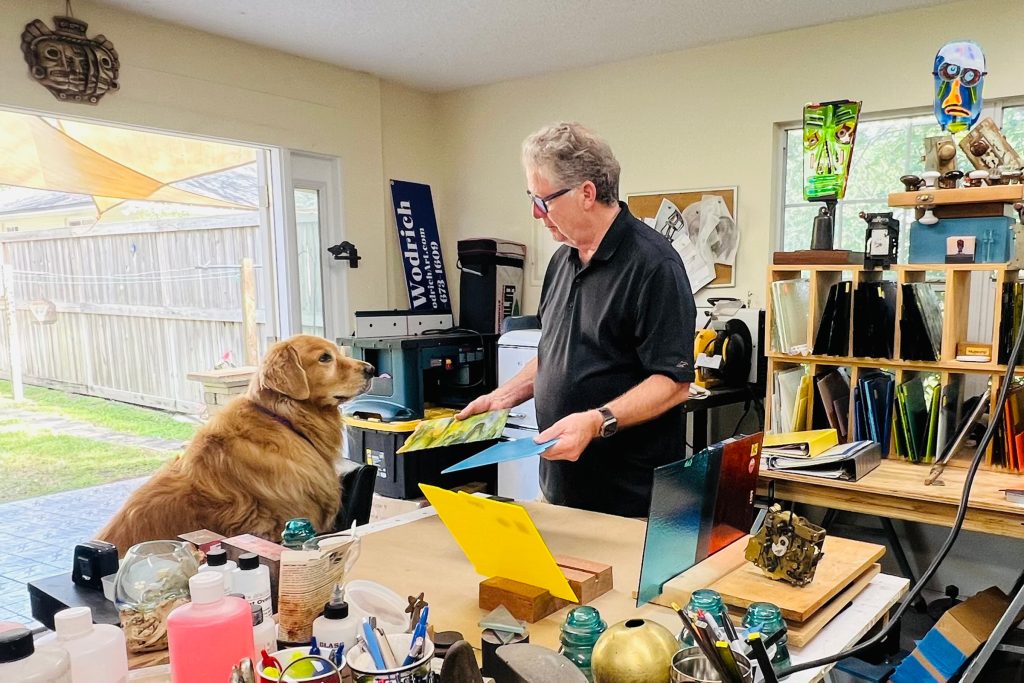
There is a chemical aspect to the process as well. Wodrich has to make sure every piece of glass comes back to the same temperature at the same time, so tension isn’t created within the glass. Additionally, some colors are more susceptible to breaking than others and thicker pieces require more time in the kiln, which can leave it more susceptible to stress.
Wodrich is mostly self-taught, but he has taken a few seminars and has watched a lot of videos on YouTube.
“A degree in anthropology and a degree in law don’t really transfer over,” he said.
He started out making pieces simply for himself and his friends and family were intrigued. They told him they had never seen anything like what he was creating.
“I received lots of positive feedback,” he said. “And my wife has been great. I think the more feedback you get, the more you put yourself out there and the feedback remains positive, the more you’re going to be encouraged.”