





Dee Reibach finally was able to have a dog after she moved into her own home with a large fenced yard. Her remote job guaranteed the time and flexibility to care for and train the Labrador retriever puppy she had always wanted.
Because her only pet was the family dog she loved as a child and without any puppy experience, Reibach assumed that she needed to find a local breeder to purchase a Labrador retriever. People who choose purebred dogs typically do so because they are familiar with the breed or prefer a dog with known traits and appearance. Reibach and her best friend Suji Lawrence, another dog-loving millennial, chose the easiest search option; they browsed the internet.
“My friend Suji and I looked at local breeders with puppy photos online and thought we had chosen the perfect puppy from a person who presented himself as a reputable, licensed breeder. We had no idea that the puppy’s veterinarian certificate and other documents were probably forged and the ‘licensed breeder’ only cared about sales,” she said.
Reibach ended up purchasing two sibling puppies after encouragement from the breeder. However, because of her traumatic experience, she decided to share her story to publicize the importance of extensive research into dog breeders, basic facts about evaluating puppy health, the recommended veterinarian care for puppies younger than eight weeks of age, and how to recognize questionable sales transaction details.
Reibach said the Labrador retriever puppies, whom they named Grace (black) and Cooper (silver-blue), appeared healthy at first, although small for eight weeks. Yet within two days of being brought home, both puppies gradually stopped eating, drinking or playing. They began to vomit, had diarrhea and their gums were white instead of healthy pink.
Her veterinarian tested them for parvo: both were negative. However, the puppies were positive for internal worms. According to the American Kennel Club Health Foundation, their alarming symptoms indicated internal parasite infestation.
Reibach and Lawrence unfortunately soon learned a great deal about the importance of the recommended standard puppy veterinarian care as the veterinarian tried to save the desperately sick puppies. Both were drastically underweight for the average healthy eight-week-old Labrador puppy (10-15 pounds) and were deemed younger than eight weeks. Reibach’s veterinarian confirmed that Grace only weighed 3.7 pounds, and Cooper weighed 4.5 pounds.
Frantic, repeated calls to the breeder about the puppies’ health were unanswered. Then he completely blocked communication while continuing to advertise Labrador puppies for sale, using the same photographs of Grace and Cooper.
Over the next days, the puppies continued losing weight and seemed too weak to survive. On day six, Cooper lost his battle and died, as the veterinarian worked to save Grace. The veterinarian bill for the puppies’ clinic stay, appointments, treatment, and medications reached thousands of dollars.
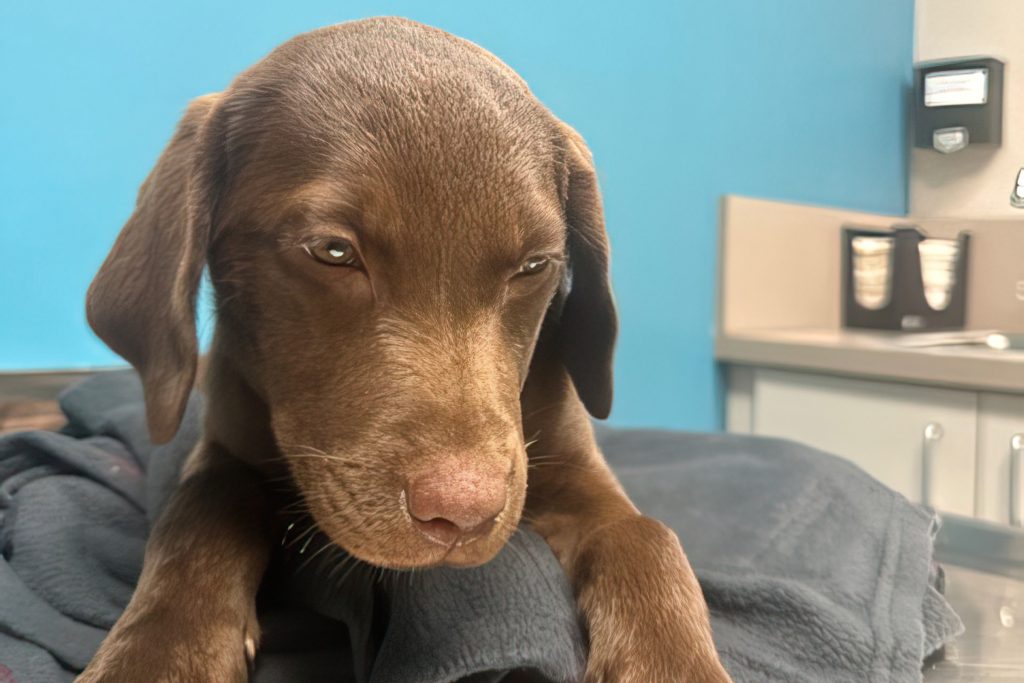
Grace finally turned the corner and began to recover. She slowly regained weight and strength, but Reibach still tears up when describing the heartbreaking story and death of Cooper; “We knew he had passed when he stopped crying.”
She said that worst of all was the suffering the young dogs endured, which continued even after Cooper’s death. Grace paced the house, searching for her missing brother and mourning him. Their veterinarian said that if the breeder had given the standard puppy de-worming treatment, it would have prevented the hookworm and roundworm infestation that caused their illness and Cooper’s death.
“De-worming and vaccines stimulate the immune system to produce antibodies that recognize and destroy diseases. They are essential to a puppy or kitten’s health and well-being, helping prevent and protect against life-threatening diseases. They promote a strong immune system and help avoid costly treatments or the spread of contagious diseases,” said Dr. Howard Acree of Cedar Hills Animal Hospital.
In hindsight, there were all-too-common red flags regarding the persuasive breeder they chose, the physical condition of the puppies, and the details of the sale. They did not recognize his questionable actions: insisting on meeting them in a Publix parking lot was one. The puppies cost $600 each, while the typical price for an AKC-registered purebred Labrador retriever puppy ranges from $800 to $2,000 or more, depending on the bloodline. Also, the documents they received looked authentic but were illegible, a typical sign of a scam. They never received any AKC purebred registry documents.
The state-required health certificate for the sale of a dog or cat must include all vaccines and de-worming treatments, including medications. By signing the certificate, the examining veterinarian confirms that to the best of his or her knowledge, the pet has no sign of contagious or infectious diseases, including a clean fecal test with no evidence of internal parasites: hookworms, roundworms, tapeworms, and whipworms. Additionally, cats must receive specific feline tests and vaccines before sale.
Officials familiar with unlicensed breeder scams warn that they create legitimate-looking online advertisements without legal credentials. They operate as “backyard breeders” with a few animals or puppy mills breeding hundreds of animals hidden from public view and law enforcement. The predictable outcome for buyers and the usually neglected, mistreated animals can be devastating.
Reputable, licensed dog and cat breeders hold verifiable credentials and adhere to accepted, regulated standards of animal care. They welcome potential buyers to their homes or kennels, where it is often possible to see a puppy’s parents and littermates.
The potential buyer has the legal right to receive legible breeder licensure and verified veterinarian documents. Puppies and kittens sold as purebred must be accompanied by AKC purebred registry documentation.
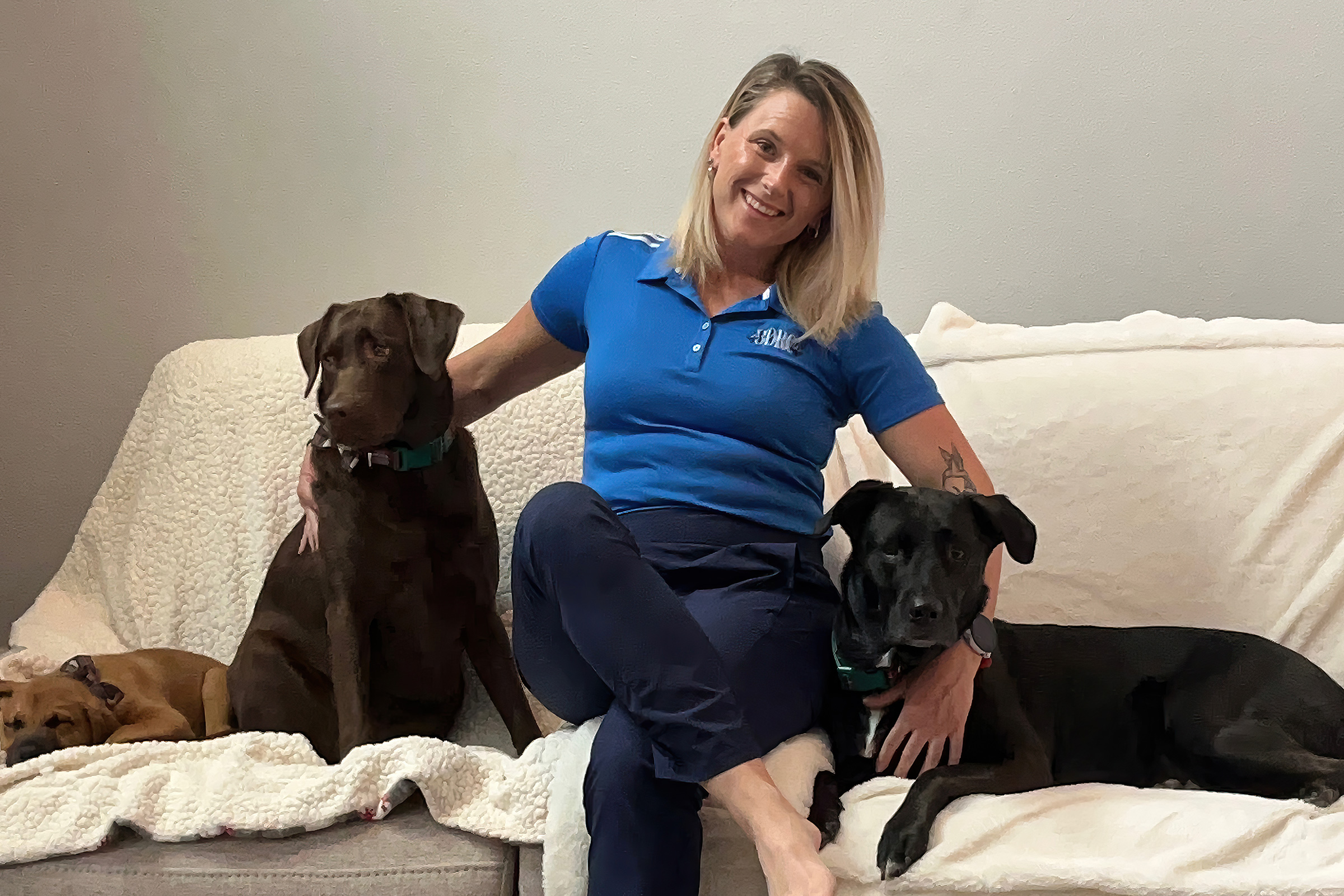
Reibach now has Grace and a chocolate Labrador named Hope, who came from a similar sad situation. Hope’s breeder operated a puppy mill on a rural farm and was closed down by law enforcement. The sole feline in the family is her rescue cat Jag, whom she bottle-fed after he was orphaned and abandoned behind an office.

Like many people, Reibach was unaware of the nonprofit, licensed rescue organizations in nearly every state, including Florida, for almost every dog breed. These organizations rescue purebred or high-content purebred dogs from shelters and law enforcement confiscations.
Their websites advertise adoptable dogs of all ages. They screen applicants and charge an adoption fee for dogs and puppies, which are fully vetted prior to adoption. These breed-specific nonprofits have no physical shelters but use a network of volunteer fosters.
The nonprofit, all-volunteer Labrador Retriever Rescue of Florida (LRROF) has a network of fosters in Jacksonville and throughout Florida . They rescue, rehabilitate, and place Labrador retrievers in forever homes and coordinate with shelters and other nonprofits. Their website includes information and applications for adoption, foster, or to contribute tax-free donations. Reibach recently contacted them to apply for the adoption of another Labrador retriever. The experience of adopting her rescue Labrador-mix puppy Charlee from LRROF was the complete opposite of those previous experiences.
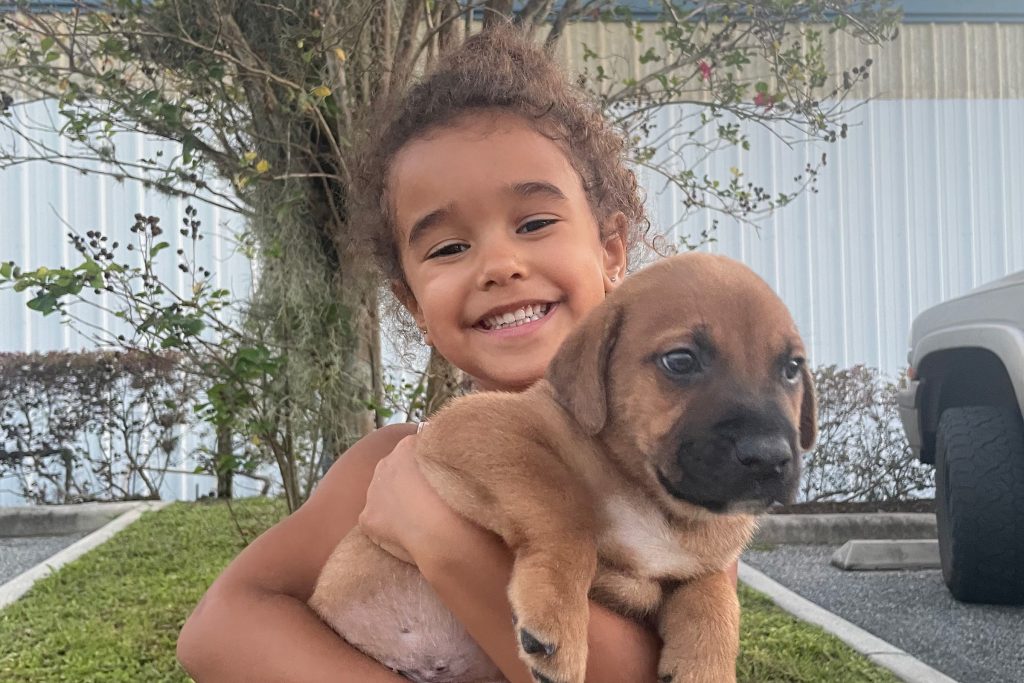
“Charlee, his mother, and siblings were confiscated by law enforcement and accepted by LRROF for vetting until adoption. When I got him, Charlee was a healthy, perfectly happy, adorable puppy. When I noticed there were a few worms in his stool that turned out to be hookworms, I contacted LRROF, and they responded immediately. They paid for his veterinarian visit and medication and kept in touch with me,” Reibach said.
Adoption from a municipal shelter or private nonprofit animal rescue has multiple benefits. This adoption method helps a homeless pet, opens up desperately needed kennel space, and provides peace of mind due to the follow-up support and guaranteed, full vetting of animals approved for adoption. Most importantly, if an adopted animal does not work out for any reason, it can be returned.
On behalf of the hundreds of animals waiting for foster or adoption at Jacksonville’s Animal Care & Protective Services on Forest Street or the Jacksonville Humane Society on Beach Boulevard, from private rescue nonprofits or surrounding county shelters, local rescuers urge readers to adopt not shop for a new pet.
Resources
Florida Pet Law, Section 828.29:
www.fdacs.gov/consumer-resources-Pet-Law
Regulations/health requirements for sale of dogs
and cats, buyer guarantees & legal protections.
Florida Department of Agriculture & Consumer Services.
(850) 410-0950: report pet health certificate issues.
(800) 435-7352: report dog or cat sales violations.
Labrador Retriever Rescue of Florida lrrof.org



![DSC_9665[1]](https://residentnews.net/wp-content/uploads/2024/01/DSC_96651-300x200.jpg)