




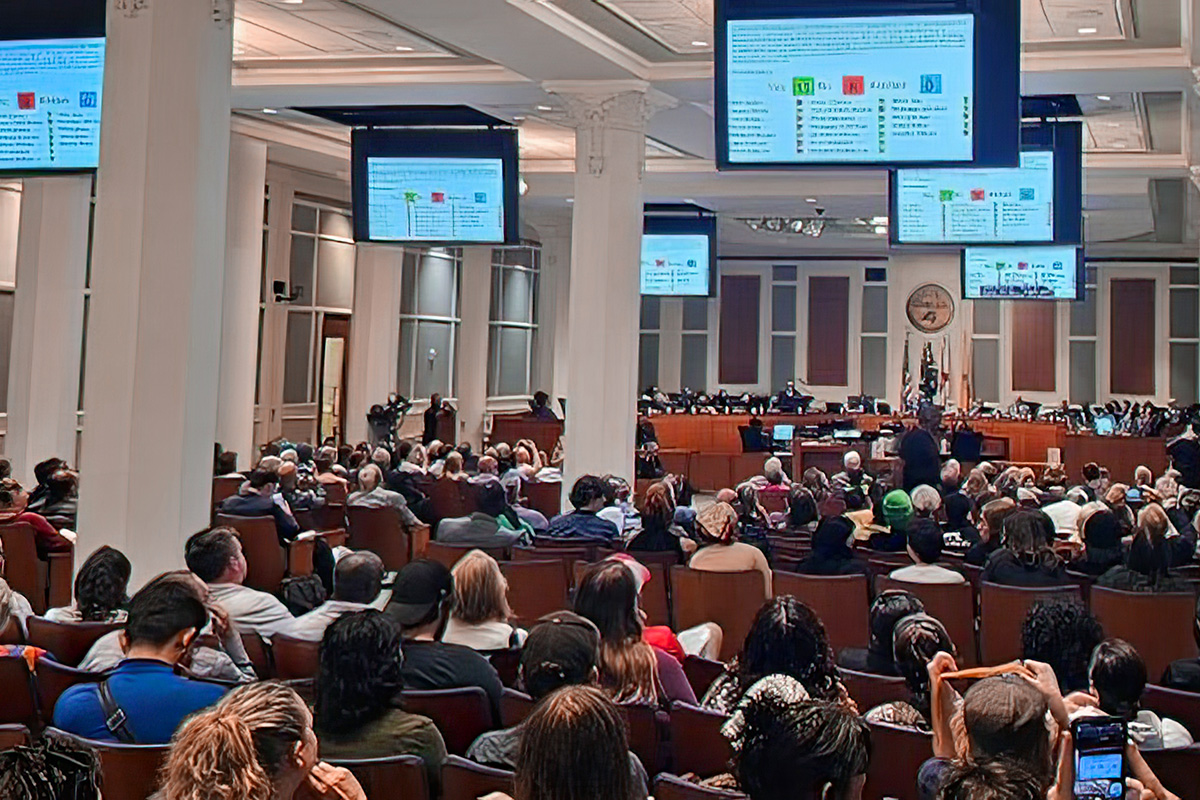
Following the controversial approval of a Planned Unit Development application for the Lofts at Southbank project, At Large Group 4 City Councilmember Matt Carlucci has introduced legislation he hopes will add additional protections regarding PUD applications for projects that conflict with an area’s zoning overlay.
A public hearing has been continued to July 16 to consider Bill 2024-0373, which would amend the city’s current zoning code “to prohibit PUD zoning applications which allow deviations from zoning overlays unless approved by a two-thirds vote of the full council.”
This would alter the current procedure, which requires a simple majority vote.
“I think it merits a two-thirds vote of the council to break an overlay,” Carlucci said. “Overlays are not just a typical zoning; they’re zoning that’s been modified by community input.”
Broken overlays
Currently, there are 11 zoning overlays within the City of Jacksonville: Downtown, Springfield, Mayport Road and Waterfront, San Marco, Riverside/Avondale, Industrial Sanctuary Areas, Black Hammock Island, King/Soutel Crossing Area, Arlington Area and the Cedar Point and Sawpit Road Area.
Carlucci said his proposed legislation is “a direct result” from the approved PUD rezoning of the Lofts at Southbank mixed-use development to include self-storage as well as workforce housing residential units and ground-floor retail/restaurant space. Opponents to the rezoning argued for its denial in part because they said the self-storage component was not permissible under the Downtown Overlay.

During the April 16 public hearing at the Land, Use and Zoning (LUZ) Committee meeting, attorney Steve Diebenow countered these claims, stating a PUD “does a lot more than just create the use [of self-storage]” and that the Downtown Overlay does not prohibit the use of a PUD.
“Nothing in the overlay prohibits the use of a PUD,” Diebenow said. “Contrast that with San Marco or the Arlington overlays. Those both have specific restrictions on the use of the PUD.
“The Downtown Overlay doesn’t have any language to that effect,” Diebenow continued, “and as a result, there’s nothing that prohibits a PUD from being used downtown to create this use.”
Carlucci said this is not the first time an overlay has been broken. He said the San Marco overlay was broken in 2020 with the passage of another rezoning for an apartment complex that allegedly violated the overlay’s maximum height restriction of 35 feet. According to the Planning and Development Department’s report for the project, the developer complied with the overlay’s height restrictions by using the “weighted average” of the height of the apartment building and its accompanying parking garage.
Though the application of the buildings’ “weighted average” height was contested by some, the city council ultimately voted in favor of the development, thus breaking the overlay, said Carlucci, adding that the Black Hammock Island Overlay also was broken shortly after it was created.
The Planning Commission Advisory Report recommends approval for Carlucci’s bill by both the Planning and Development Department and the Planning Commission. Though no one spoke in opposition to the proposed legislation, the report did note that “there was a concern that this may s