






Jacksonville has quite a few residences with storied pasts, but the du Pont mansion and estate – now Epping Forest Yacht and Country Club – might boast the most illustrious history of them all.
“The estate has a remarkable history and continues to be one of Jacksonville’s most treasured waterfront landmarks,” said Rachel Cliff, Epping Forest’s director of member experience.
The story begins in Delaware’s Brandywine Valley, near Wilmington, where Alfred Irénée du Pont was born in 1864 into a prominent and wealthy family descended from exiles of the French Revolution. As a boy, du Pont was captivated by the stories his mother, Charlotte, told of her trips to distant Florida and its exotic wonders – alligators, white-sand beaches, the Everglades and the St. Johns River.
In 1877, however, both du Pont’s mother and father died within a month of each other, and he learned that his family’s house would be sold, and the du Pont children would be split up. Just 13 years old, he led his four siblings in a rebellion – the children armed themselves with a rolling pin, an axe, an antique pistol and a 12-gauge shotgun, refusing to budge until they were assured they would retain ownership of the family home.
Though he came from a privileged background, du Pont dropped out of the Massachusetts Institute of Technology and went to work at one of his family’s powder mills as a common laborer, working his way up in the DuPont Company. He personally witnessed gruesome accidental explosions, some of which left workers’ bones embedded in nearby trees. Disturbed by what he saw, he patented more than 200 inventions in his lifetime, many of which were designed to improve workplace safety.
Du Pont eventually took control of the DuPont Company alongside his cousins Pierre and Coleman (although their relationship later soured) and transformed the 100-year-old family business into the diversified chemical company it is today, building research labs and pioneering new paints, plastics and dyes.
Arrival in Jacksonville
In 1921, du Pont married San Diego schoolteacher Jessie Dew Ball – the couple enjoyed making frequent trips to Florida aboard his motor yacht, the “Nenemoosha”. When Pierre became Delaware’s Tax Commissioner in 1925, du Pont relocated to Jacksonville for good, unable to stand the thought of his cousin nosing around his personal finances.
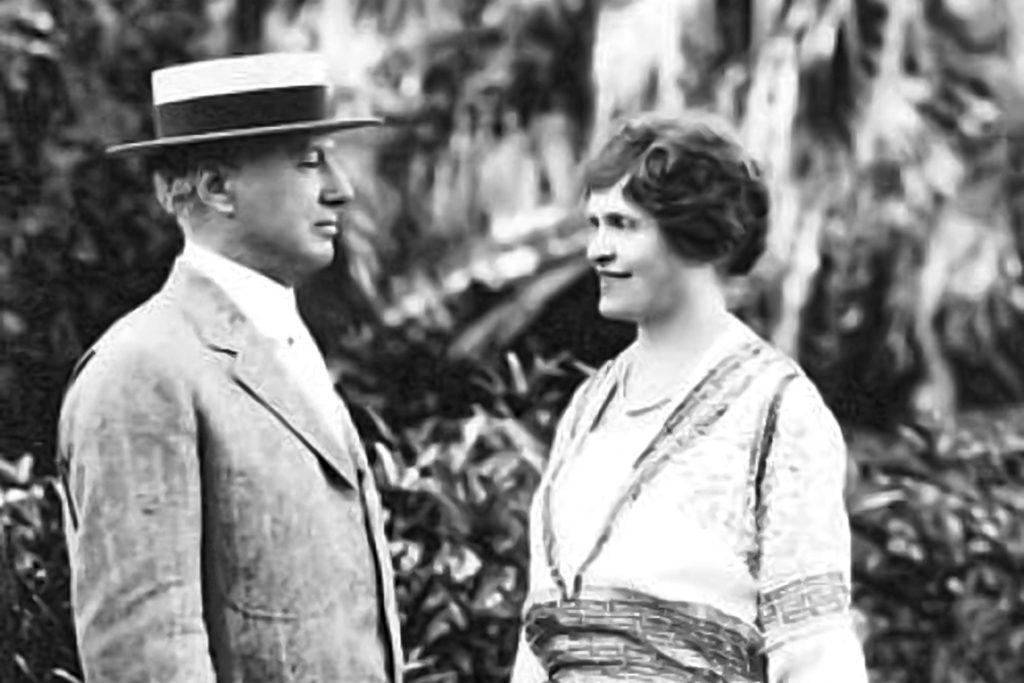
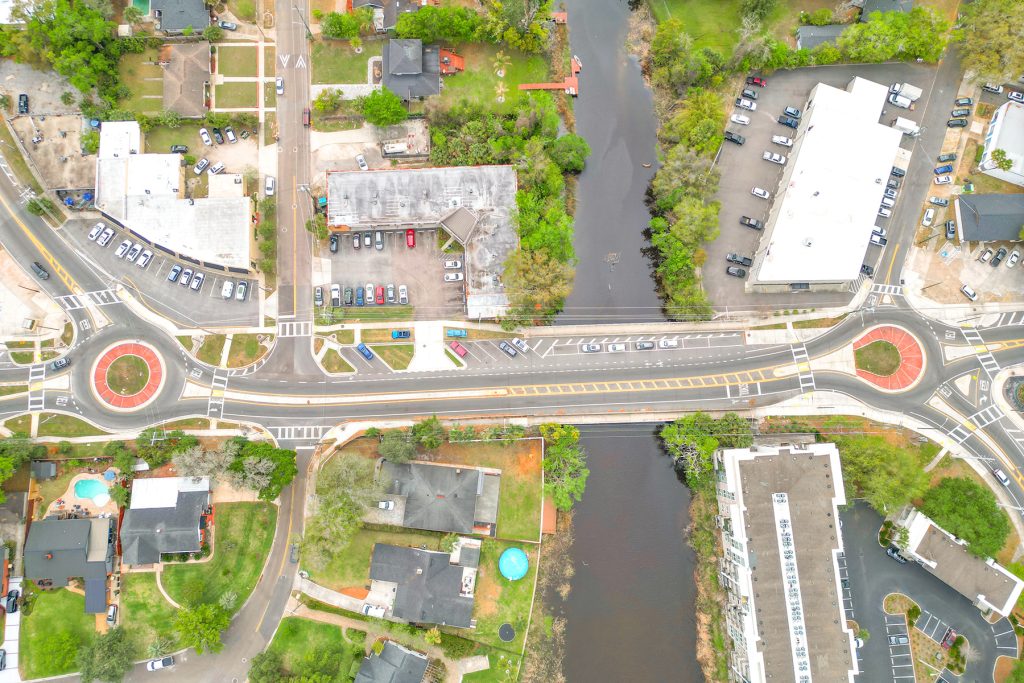
Du Pont purchased 58 acres just south of Christopher Creek from the San Jose Estates Company, which had built the San Jose Hotel (now The Bolles School) and had planned to use the property to build the Vanderbilt Hotel until the Florida land boom burst in 1926. He chose the site for its natural beauty, abundant wildlife, and the majestic oak trees that still characterize the property today. Located at one of the widest points in the St. Johns River, it was also the ideal place for yachting aboard his beloved “Nenemoosha.”
Construction of the du Ponts’ 25-room mansion began in 1926 and took two years. The home was designed by famed local architect Harold Saxelbye, whose other works include Avondale’s Lane-Towers House, Riverside Baptist Church, and the Greenleaf & Crosby Building and Western Union Telegraph Building (now MOCA) downtown.
According to Cliff, the estate has a blend of Gothic, Spanish Renaissance and Baroque architectural styles, with brick courtyards, carved stone pilasters and marble and tile floors. Ornate gardens feature a central stone fountain and whimsical carved figures – acorns, owls, pelicans, frogs, and lions – which take inspiration from European heraldry and are reflected in Epping Forest Yacht Club’s present-day emblem.
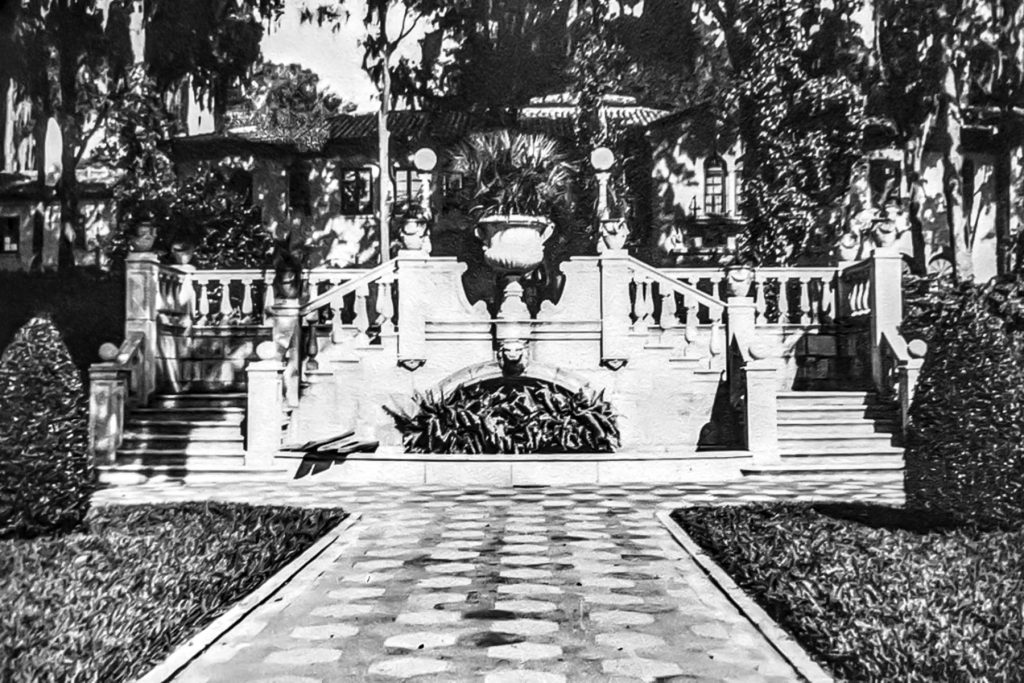
Jessie named the estate Epping Forest after the plantation in Virginia where her ancestor, Mary Ball Washington, George Washington’s mother, was born. She is known to have called her and her husband’s Jacksonville home “the shack.”
In the late 1920s, du Pont invested $15 million of his personal fortune in various Florida banks to stabilize them amid the Great Depression’s bank runs. By the time he died of an apparent heart attack in 1935, his riverfront estate was valued at $56 million. His last words were reported to be, “Thank you, doctors. Thank you, nurses. I’ll be all right in a few days.”
In October 1985, 50 years after du Pont’s death, his grandson Alfred Dent claimed in a “Forbes” magazine article that Jessie and her brother Ed Ball had actually poisoned du Pont to prevent a new will from taking effect that would have reduced their inheritance. It should be noted that Dent spent decades in court in bitter litigation against Ball over his management of the Alfred I. du Pont Testamentary Trust.
A New Chapter
Epping Forest served as Jessie Ball du Pont’s primary residence and home base for charitable activity until she died in 1970, after which local businessman Raymond Mason purchased the estate. At 22, Mason had founded the Charter Company, a conglomerate invested in oil, insurance, and communications, which peaked at 61st on the Fortune 500.
Close friends with President Gerald Ford, Mason hosted Ford and Egyptian President Anwar Sadat at Epping Forest in November 1975 for diplomatic talks about Middle East peace and a billion-dollar nuclear reactor deal. Over the years, other high-profile visitors to Epping Forest have included the Shah of Iran, Mohammad Reza Pahlavi; King Hussein of Jordan; Princess Lila Merian of Morocco; former Vice President Mike Pence; and the Vanderbilt, Carnegie, and Biltmore families.
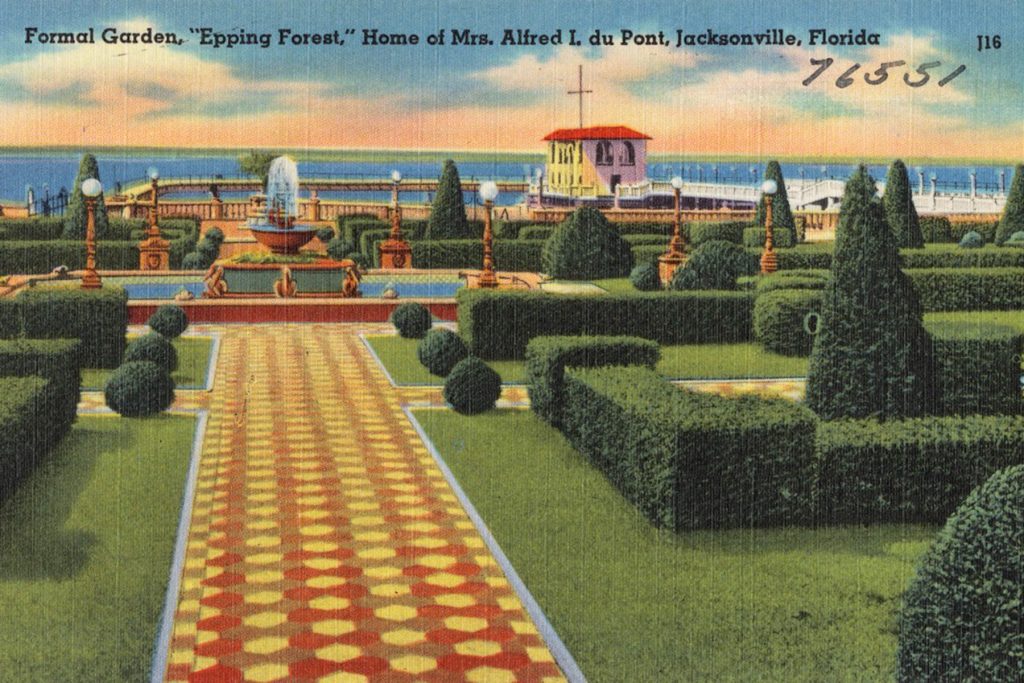
Mason lived at Epping Forest until 1984, when the Charter Company filed for bankruptcy, and he sold off the property to Herb Peyton, founder of Gate Petroleum and father of former Mayor John Peyton. The estate was carefully restored and became Epping Forest Yacht & Country Club, blending the romance and elegance of the historic residence with modern recreation and amenities.
One Last Surprise
Nearly 80 years after his death, Alfred du Pont had a final surprise in store. In 2013, the new president of the Alfred I. du Pont Foundation came across some puzzling bills for a storage unit that nobody could account for. That led to the discovery of more than 300 boxes of possessions from du Pont’s estate and yacht, which had been forgotten in storage for years.
The items – including matching maid uniforms, antique golf clubs and a 1907 Tiffany and Co. bowl – were auctioned off to benefit the foundation’s charitable work. The episode marked one last chapter in a saga of property whose history is full of characters, events and details that read like a novel.




![AFP[1]](https://residentnews.net/wp-content/uploads/2020/12/AFP1-300x200.jpg)