




A few short years ago, Mary Daniel never would have thought she’d be serving on governor-appointed task forces or heading to Washington, D.C. to lobby members of Congress.
A caregiver and medical practice manager, Daniel cared for her husband, Steve, for six years after he was diagnosed with early-onset Alzheimer’s at just 59 years old. Steve eventually entered assisted living in 2019, and though he and Daniel were initially hesitant, it turned out to be exactly what the couple needed.
Steve thrived in his new setting and especially enjoyed serving as the community’s unofficial front desk greeter. This role allowed him to use his people skills once again – skills which had made him such a successful salesman. Daniel would visit Steve for several hours every evening after work, and the two would lie in bed, watch movies, and catch up on each other’s days.
“I got to be his wife again, not just the person who bathed and fed him,” said Daniel.
A Suspension of Visitation
When she told her husband goodnight on March 11, 2020, she had no idea their cherished routine was about to come to a screeching halt. The following day, Daniel received a call from Steve’s assisted living facility: COVID was spreading in Florida, and visitors were temporarily prohibited to protect residents. Fifteen days to slow the spread, she was told.
But 15 days soon became a month, then two, and eventually three, and still, visitation was prohibited even for family members. Daniel was allowed video calls and window visits, but Steve struggled to understand why he wasn’t being allowed to hug his wife and hold her hand. He cried often and lost 10 pounds in the first month of isolation.
“That kind of touch was all of a sudden gone, and he couldn’t understand why,” said Daniel.
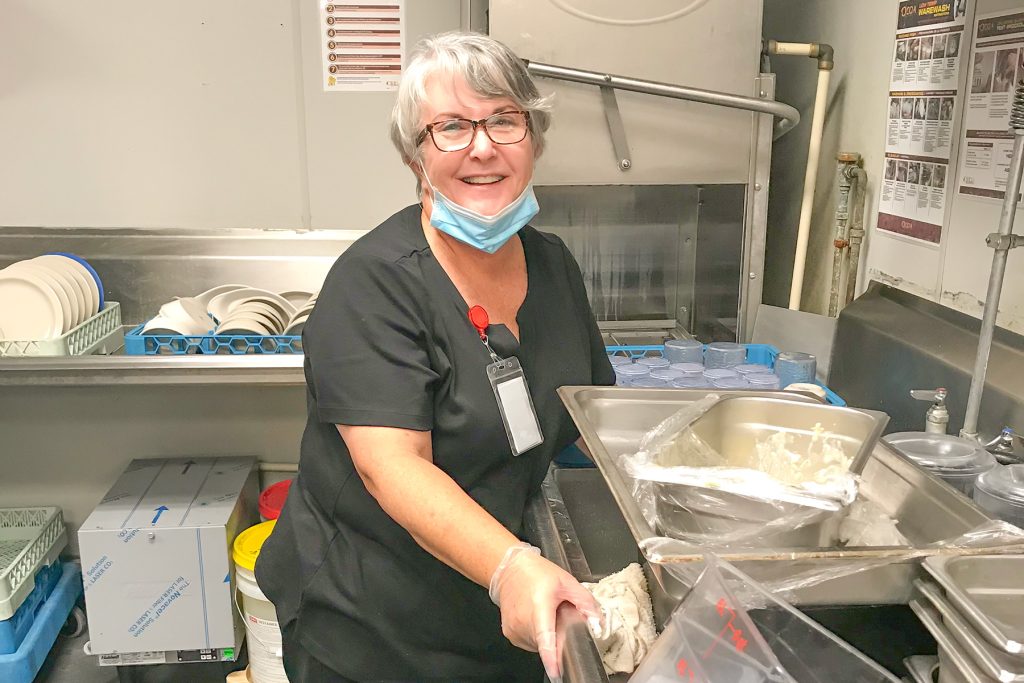
With no end in sight, Daniel got creative; she took a job as a dishwasher at the assisted living facility so she could be with Steve. On July 3, after 114 days apart, Daniel was finally able to embrace her husband once again.
In a video she has since reposted on her Facebook page, Daniel reflected on her first shift as a dishwasher, which she said was overwhelming but rewarding for the time she got to spend with Steve after her nearly-six-hour training shift of washing lunch and dinner dishes ended.
“I’m going to go back tomorrow,” she said in the video. “I promised him today I will be back tomorrow and that’s a good thing.”
Her story was first reported by local media and quickly went viral, eventually getting national broadcast and print coverage. It wasn’t just reporters who took notice of her story, however. In early August, Governor Ron DeSantis visited Jacksonville and met with Daniel in person.
“The first thing I said to him was, ‘Why am I allowed to touch my husband as his dishwasher but not as his wife?’” recalled Daniel.
Advocating for the Caregivers
DeSantis appointed Daniel to a state task force charged with reopening Florida’s nursing homes. The only layperson appointed, she was unfazed by the prestigious titles of her colleagues, including Florida’s surgeon general, healthcare industry leaders, and heads of state agencies. Daniel insisted that in-person visitation rights were a dealbreaker, and after a series of sometimes contentious meetings, she got her way.
Having witnessed the devastating toll isolation took on her husband’s health, Daniel began advocating for others in Steve’s position. She started a grassroots Facebook group called Caregivers for Compromise, which eventually spread to all 50 states. The group’s message was simple: Isolation kills, too.
Daniel soon took her fight to Tallahassee, where she championed the No Patient Left Alone Act. Passed in April 2022, the bill requires designated essential caregivers to be allowed a minimum of two hours of daily visitation time in hospitals, hospices, and long-term care facilities.
Taking it to Capitol Hill
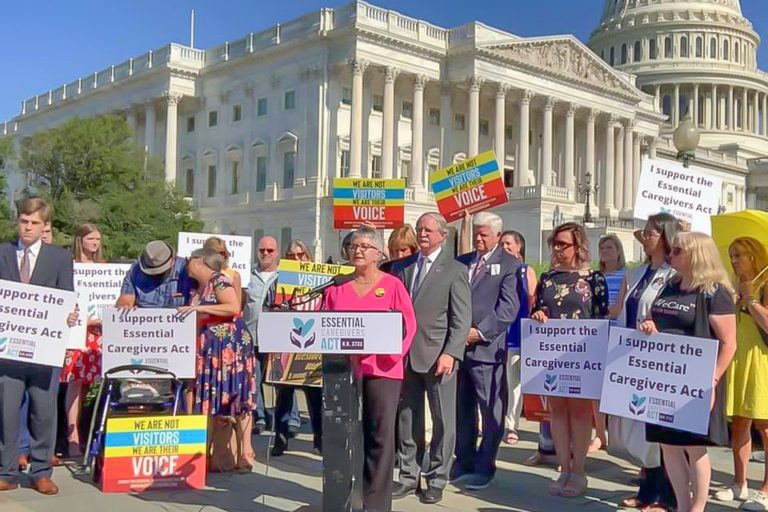
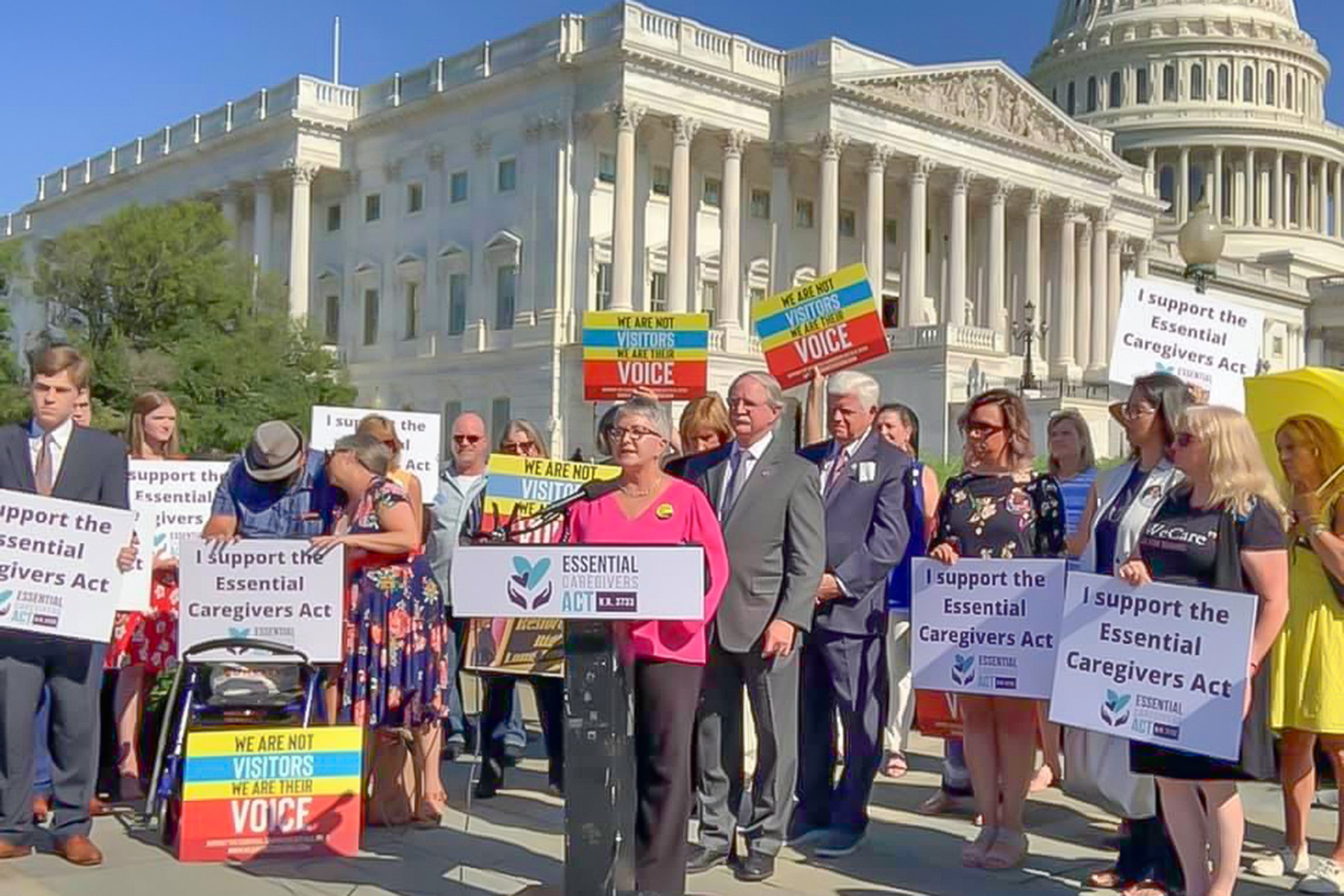
Now, Daniel is fighting for legislation at the federal level. This June, she led a group to Capitol Hill to push for passage of the bipartisan Essential Caregivers Act of 2025, which would guarantee visitation rights for essential caregivers nationwide.
Though the bill previously stalled, it was reintroduced in December and has picked up 147 cosponsors in the House and 30 in the Senate. Daniel says she expects a vote in July, and hopes this will finally be the year the bill becomes law.
While the pandemic has subsided, Daniel worries that natural disasters and other emergencies could still be used to deny visitation rights, and points out that VA hospitals and other federal facilities are not subject to state regulations. She also argues regular visitation holds facilities accountable and ensures they provide residents the highest standard of care.
“Nobody ever expects to have somebody in a nursing home – I never would have believed I would have needed to place my husband in long-term care – but until something like this happens to you, then you might understand the feeling of being totally separated from them,” said Daniel.
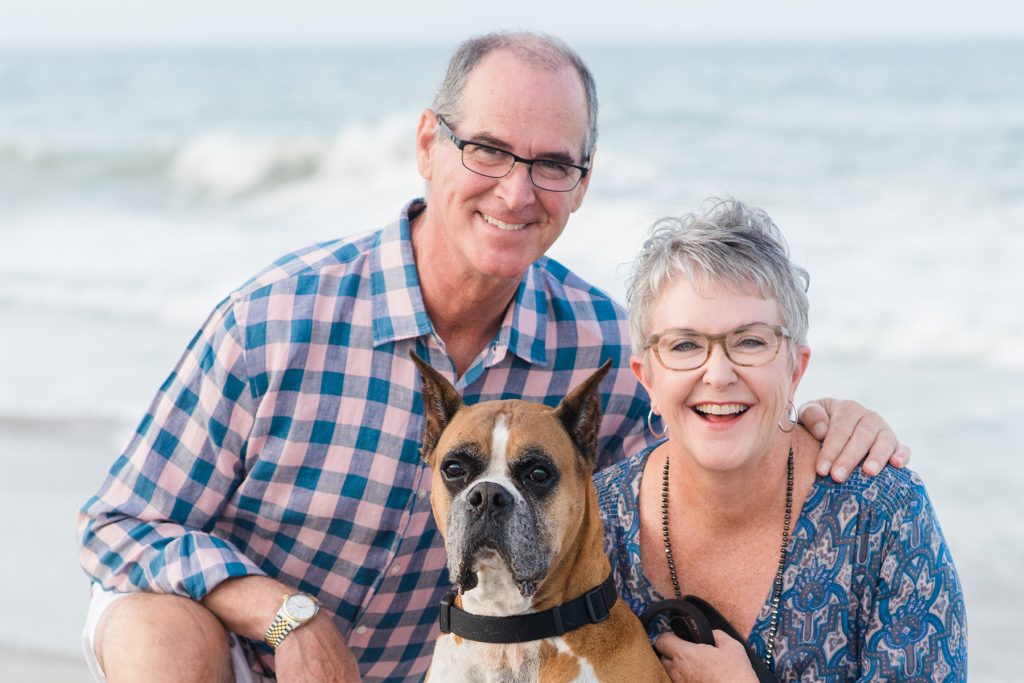
Steve, the man who sparked all of this advocacy, passed away peacefully in December 2022. Daniel was heartbroken but took comfort in the fact that she had fought for her husband and had zero regrets. She had kept the promise she made to Steve, driving home the day he had been diagnosed.
“I promised him I would never leave him alone, that I would be with him every single day, that I would hold his hand every day, and that he never had to worry about doing this by himself,” said Daniel. “That was my driving force.”