







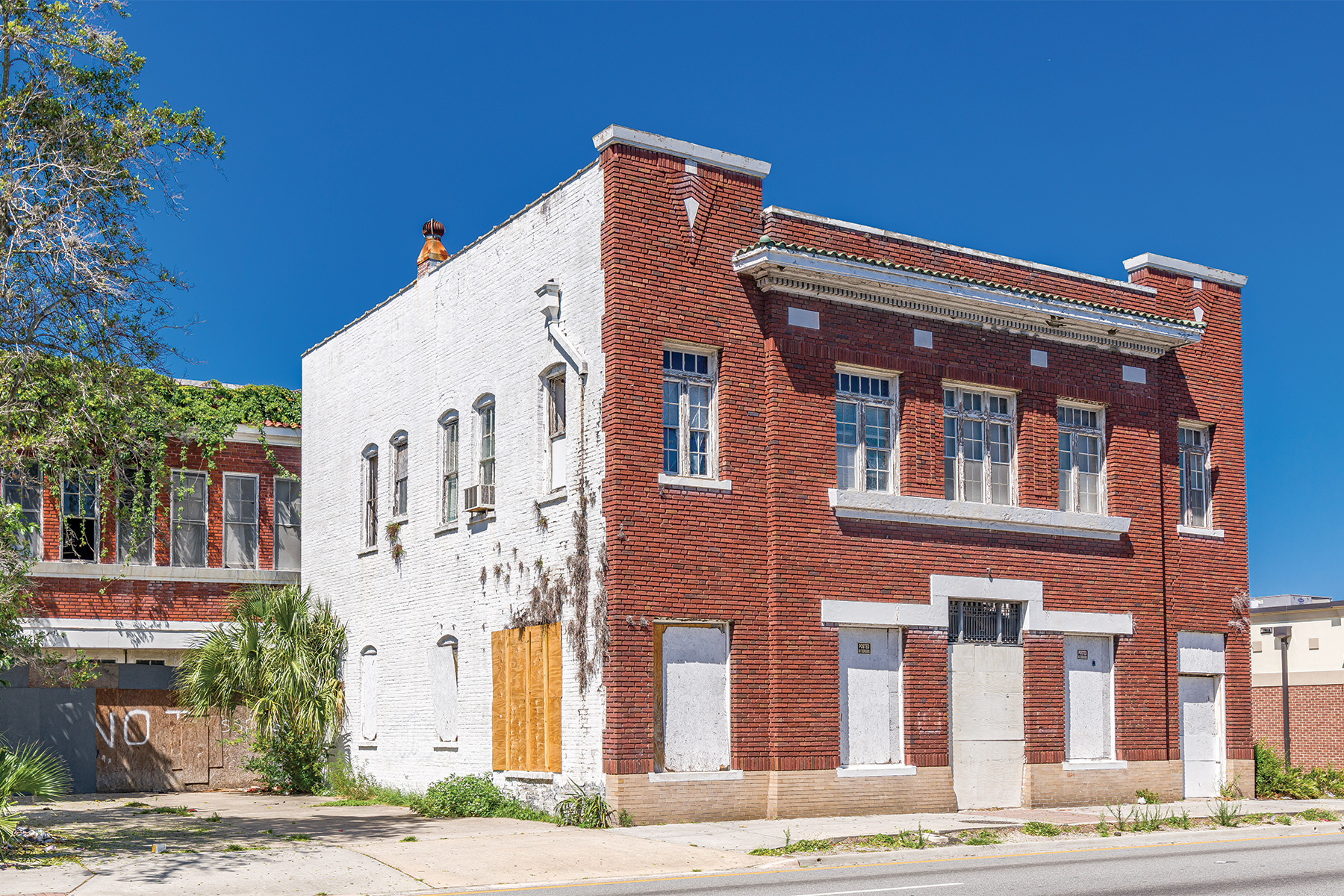
The Jacksonville Historic Preservation Commission is considering strategies to help address and prevent demolition by neglect for at-risk properties, as set forth in a report compiled by the Task Force on Demolition By Neglect.
The final report was voted upon and adopted by the JHPC at its March meeting.
Some have described demolition by neglect as a loophole in the city’s historic preservation policies. It occurs when an abandoned or neglected structure deteriorates to the point that it must be demolished to remove a public health or safety hazard.
“Demolition by Neglect affects not just the neglected structure, but also the surrounding area, and can start a contagious cycle of decay and disinvestment. The practice is especially problematic when it impacts historic landmarks and contributing structures within historic districts, which have been found worthy of preservation for future generations,” read, in part, the report’s introduction.
It added that at least 52 historic demolitions have been approved since the City began tracking them in 2021, though it did not indicate whether or not demolition by neglect was a contributing factor in these cases.
JHPC created the task force last September and over the last five months, the appointed group has worked to establish strategies, tools and initiatives to address this “pressing issue.”
Priority Recommendations
Following the meeting, Task Force Chair William Hoff said the report’s recommendations are a combination of implementing existing ordinances and introducing new approaches.
One of these new approaches is working to establish the Code Enforcement Historic Special Revenue Fund that can be used as a “revolving loan designated to pay for the exterior repair/renovation of homes or buildings owned by property owners at or below 80% of area median income, located within the locally designated historic districts.”
The report stated that financial penalties – liens and/or fines – often go ignored by the property owner and the municipality eventually reduces them. According to the report, properties within local historic districts have been fined nearly $200 million since 1998, yet just over $430,000 has been recuperated within that same timeframe. That is less than one percent of fines due.
Another recommendation is to create a scoring matrix to identify properties approaching the danger threshold of demolition by neglect and establish a procedure by with the property owner can be engaged.
“We’re going to use that to help determine when a neglected property rises to that level,” Hoff said after the meeting.
He emphasized that the matrix will be an objective scoring process.
“We all probably have in mind some properties, but it can’t be a subjective process, it has to be objective,” Hoff added.
JHPC Chair Michael Montoya said this report is a “great first step” to bring more awareness of demolition by neglect at the city level.
“It’s my hope, not just as the chair but as a resident of the historic community that this really gets a conversation started that has some teeth with the city,” Montoya said. “There are a number of things that are going to require funding. It’s going to require more attention from city employees, whether it’s code enforcement or planning, there’s going to have to be a lot of coordination with it.”
Jacksonville History Center CEO Dr. Alan Bliss echoed Montoya’s sentiment.
“I think that the problem of demolition by neglect is pretty widely recognized, but actually putting any sufficient tools into the hands of code enforcement and the office of the city attorney – the administration board, generally – that’s been sort of the missing ingredient,” Bliss said.
Success Stories and Heartbreaks
Jacksonville has celebrated its share of victories involving successful renovations and adaptive reuses of historic buildings, including what is now the Cowford Chophouse – previously the Bostwick Building – which Bliss called “one of the most spectacular examples” of adaptive reuse here in Jacksonville.
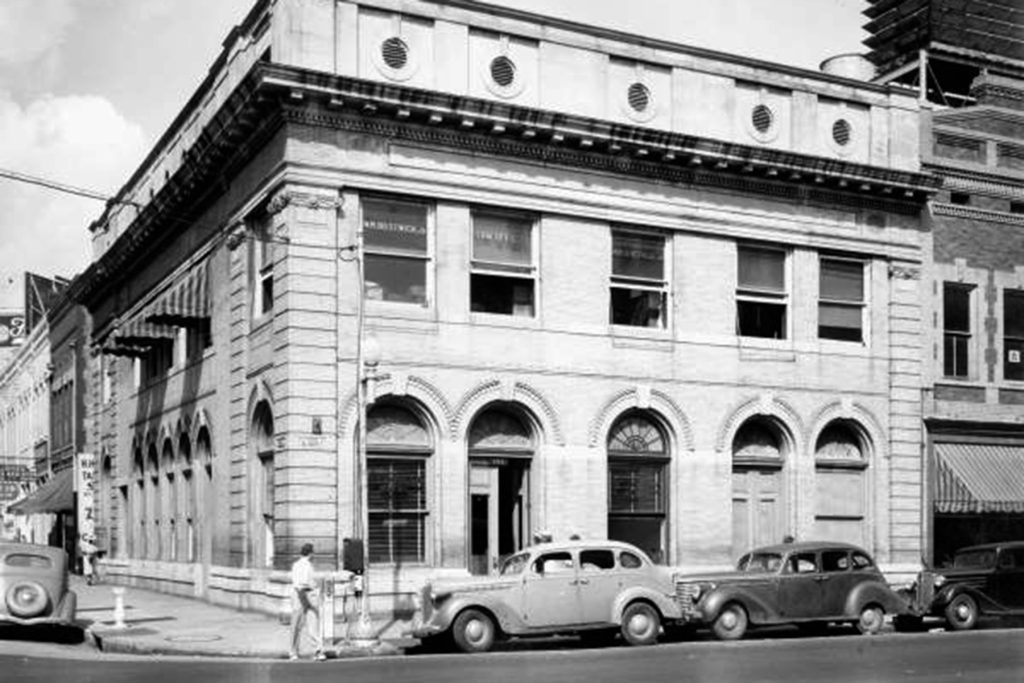
Built in 1902, the building first served as the rebuilt First National Bank of Florida following the Great Fire of 1901 and would go on to house the Guaranty Trust and Savings Bank and the Brotherhood State Bank for Savings. After years of neglect, the building was purchased by Jacques Klempf in 2014 and transformed into the upscale restaurant that today maintains restored elements of the building’s original grandeur, including exterior bricks, metal cornice and historic arched windows.
The transformed building reopened once again as a restaurant in 2017.
Another success story, Bliss said, is the Haydon Burns Library, which today is the Jessie Ball duPont Center. In 2013, the Jessie Ball duPont Fund purchased the building at 40 East Adams Street for $2.2 million. Another $250,000 went to resolving unpaid taxes on the building. What followed was a $25 million renovation project to transform the building into what it is today.
Alternately, the city has suffered some heartbreaks where demolition by neglect is concerned and Bliss said “probably the most glaring example” is the Laura Street Trio.
“[The Trio is] a property that has been allowed to fall into a state of serious disrepair and neglect to the point that some people think it’s a hazard to public safety,” Bliss said. “Should it be demolished under the circumstances? Of course, except it’s got historic significance and so it has the potential to be converted and adapted to a productive 21st century use, but that’s going to require significant capital investment…”
Ownership of the Laura Street Trio recently changed hands after a purchase and sale agreement was signed by Live Oak Estates, a subsidiary of Live Oak Contracting, and its previous owner in January. Legislation is still pending regarding a settlement agreement for the roughly $800,000 the city said has accrued against the Trio since 2015 for code violations.
The Moulton and Kyle Funeral Home on Union Street, built in 1914, is another loss to Jacksonville’s history. According to published reports, the abandoned building suffered a catastrophic fire in January 2021 and was demolished shortly after.
“It was a building that had historic significance and the owners took no action to preserve it, to maintain it and eventually it deteriorated to the point that a fire of undetermined origins finally destroyed it,” Bliss said.
“It’s a classic example of demolition by neglect,” he added.