
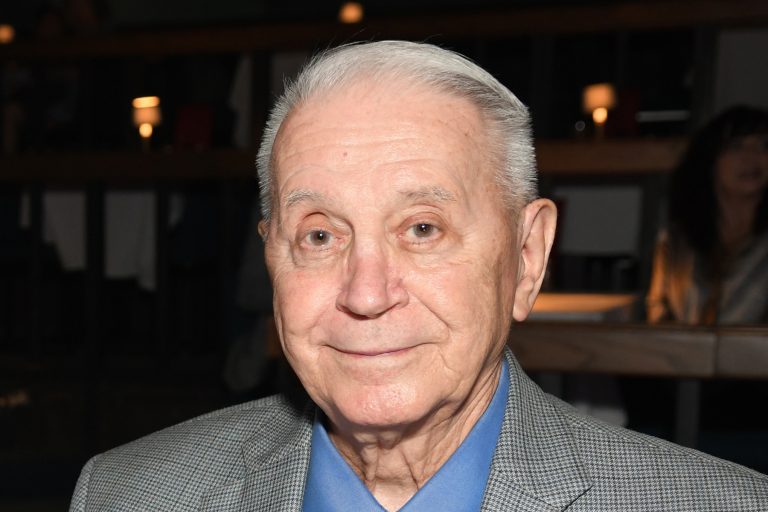

Since he was a young boy, retired orthopedic surgeon Dr. John Lovejoy, Jr., 86, has appreciated the values of thrift and reuse.
“My mother was a contractor and she built our home in the 1940s,” he reminisced while sitting in the living room of that same San Jose home he still lives in today with his wife of 58 years, Harriet. “She discovered a school that had closed and was selling its building materials. My job was to straighten out the used nails and clean the bricks. I received $5 for cleaning 1,000 bricks,” he laughed.
He learned about giving back from his father, also an orthopedic surgeon, who would review outstanding patient bills during the holidays.
“He knew his patients that were struggling, so he would write ‘Paid in full, Merry Christmas’ on their bills and send them back,” he said.
Lovejoy began putting these values into practice while he was serving on the Navy’s surgical team during the Vietnam War, taking note of all the medical supplies getting thrown away.
“We waste so much that others could use,” he said.
Lovejoy took those supplies into the village to help the indigent people living there.
Lovejoy grew up in Jacksonville and attended second through 12th grades at Alfred I. duPont Middle School. He completed his undergraduate degree at Duke University and then attended the University of Florida for medical school.
After completing a residency at the Atlanta Medical Center, Lovejoy went to work as an orthopedic surgeon at the Walter Reed National Military Medical Center (formerly the Naval National Medical Center) in Bethesda, Maryland.
“I operated on Gerald Ford’s knee, and we became great friends,” he said. “I attended Nixon’s inauguration as his guest and sat in the second row.”
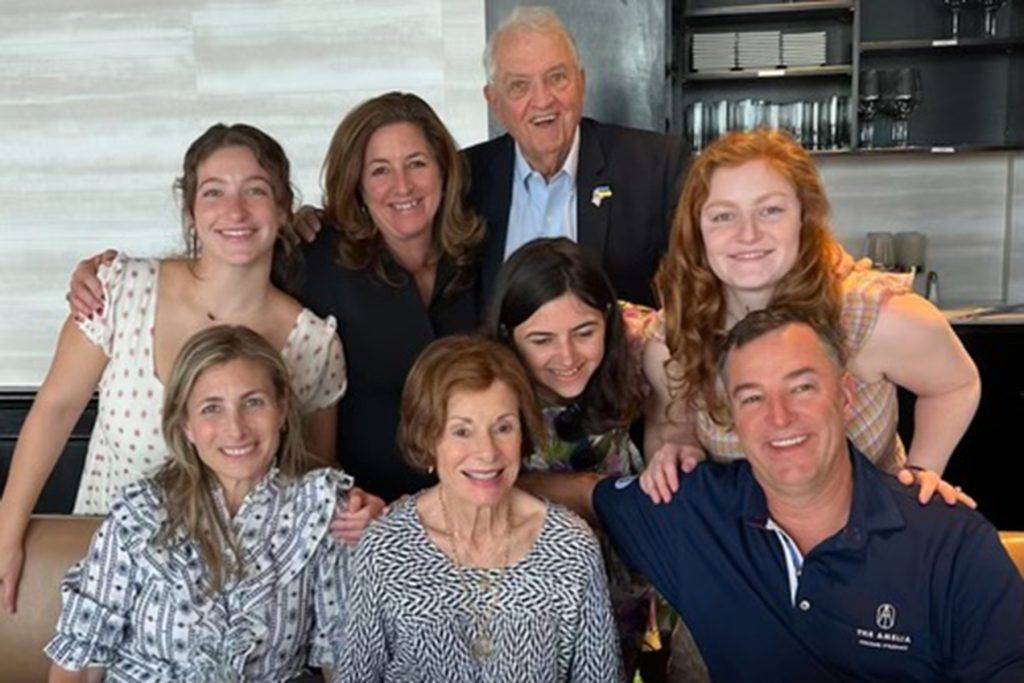
After his time in Vietnam, he moved back to Jacksonville. “I practiced at St. Luke’s, the hospital I was born in, and I retired from there when Mayo sold it to St. Vincent’s.”
While building a successful career in the U.S., he also felt the pull to care for others in less fortunate countries as a volunteer physician.
Lovejoy began his international aid efforts in Grenada, where he taught orthopedists for 20 years. His friend, the late Dr. George Fipp, told him he was needed in Haiti, so Lovejoy began serving at Hôpital Sacré Coeur in Milot, Haiti, during the 1980s. Even his children got involved.
“My daughter, Ellen, spent spring break of her senior year working in the OR and also went into the mountains with a dentist and helped pull 150 rotting teeth,” he said. “She told me, ‘Dad, I never realized how much I had.’”
Hôpital Sacré Coeur, which opened in 1968, is the largest private hospital for the 3.2 million people living in Northern Haiti. The CRUDEM Foundation assumed supervision of and financial responsibility for the hospital in 1986. In 2012, Holy Name Medical Center of Teaneck, New Jersey, incorporated CRUDEM and in 2020, the mission was renamed Haiti Health Promise.
An earthquake in January 2010 devastated Haiti; more than 222,500 people were killed and 300,000 people were injured. Just days after the earthquake, Lovejoy took a small team and, with his naval triage training, set up a 550-bed MASH-like unit to treat hundreds of wounded citizens, performing more than 180 surgeries, many of them amputations. His son, John, also an orthopedic surgeon, was part of that team. It was an intense time for the physicians, who were operating around the clock.
“We’re human and we know the suffering that they are all having and we are trying to help,” he said. “You can’t help but get emotionally involved, but you just keep working and doing the best you can.”
With that many amputees, Lovejoy oversaw the opening of the country’s first prosthetics lab in 2015. Now it’s run by Haitian doctors who received their training courtesy of Holy Name’s support.
Through Lovejoy’s dedication, Hôpital Sacré Coeur recently expanded from 63 beds when he first began his mission trips to 230 beds today. As a board member of Holy Name Medical Center, he helped raise money and secure in-kind donations from local medical partners.
“The lights came from Baptist and the beds came from Mayo,” he said. “What would have taken $6 million to build in the United States, cost $600,000 in Haiti.”
Since COVID-19 and ongoing political unrest in Haiti, Lovejoy has been unable to travel to Milot, but that has not stopped him from helping its citizens. Nearly half of Haiti’s population is experiencing acute food insecurity, which can lead to malnutrition and damage to physical and cognitive development.
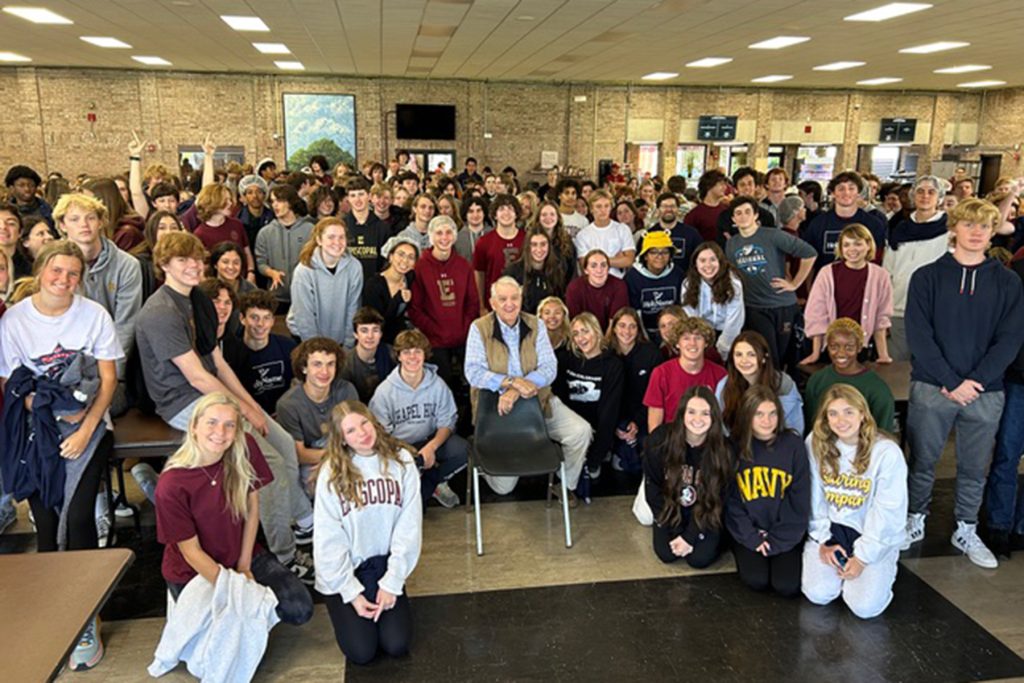
On April 10, he sponsored a “packathon” at Episcopal School of Jacksonville to pack 50,000 meals for hungry children and adults.
“Each meal costs 44 cents, so we raised $22,000,” he shared. “One meal bag contains six nutritious meals for a family.”
Participating students received service hours and, Lovejoy hopes, a desire to keep volunteering. “You get more from giving back,” he said.
For more information or to donate, visit crudem.org or tholyname.org/haiti/.