



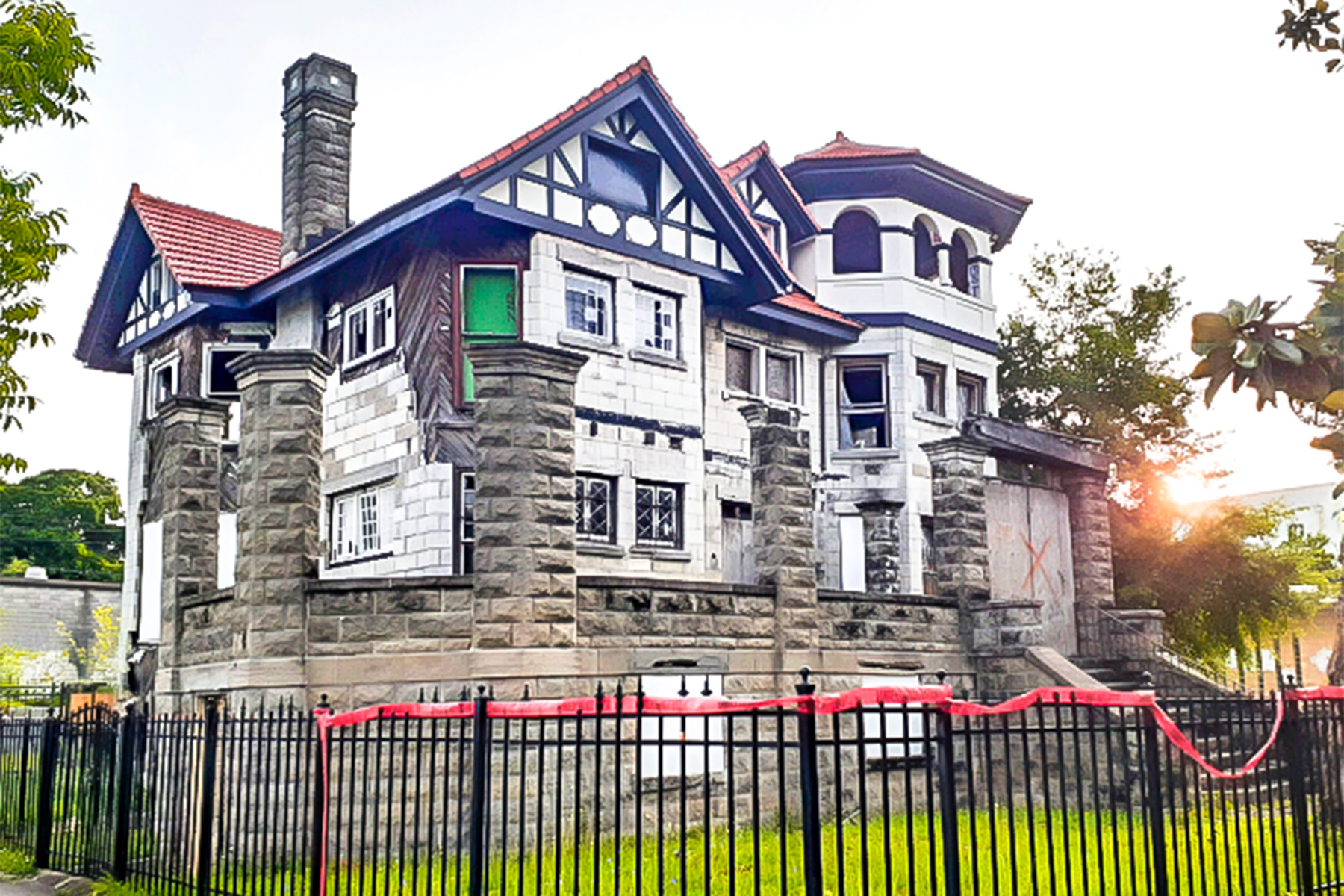
It’s a grand residence that has seen plenty of ups and downs in its 117-year lifetime: In its early history, it was home to a prominent Jacksonville resident with deep local roots; in later years, the home became abandoned, falling victim to blight and vandalism, and gaining a “haunted” reputation. Now, it stands on the cusp of being restored to some of its former grandeur. This is the story of Springfield’s Drew Residence.
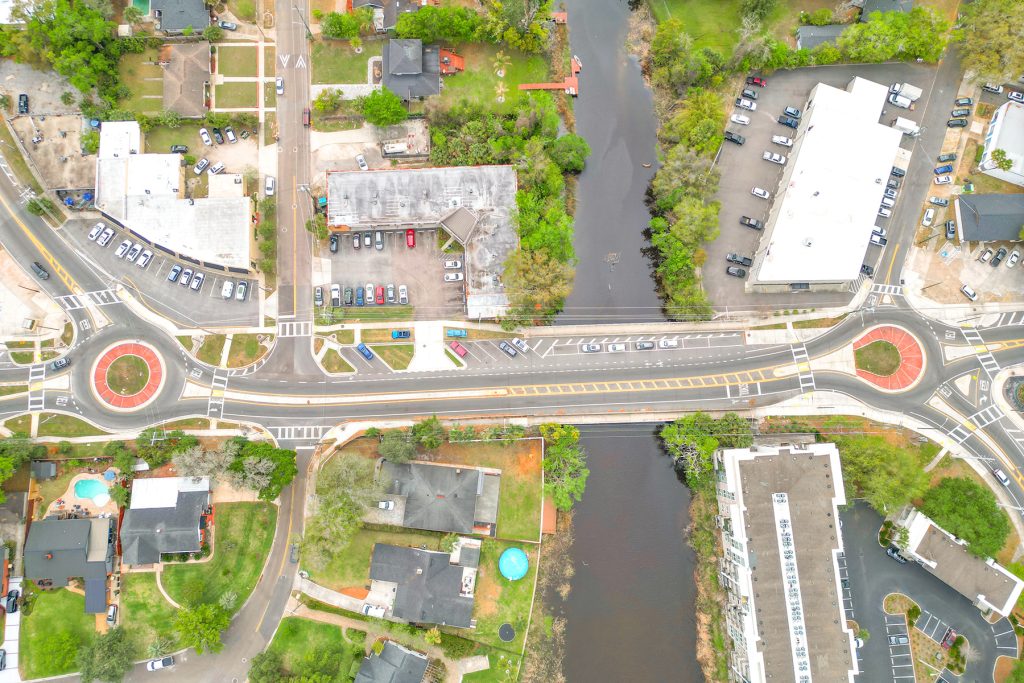
If you’ve followed Springfield’s snaking Klutho Park to its midpoint, near where Third Street meets North Pearl, you’ve likely seen the Drew Residence. It’s hard to miss, with its crumbling stones, broken glass, exposed wood and graffiti. It’s a scene that exudes decay and despair. But a century ago, it was the stuff of postcards.
Architecture
Overlooking the park and Hogan’s Creek, the Drew Residence was originally built by Dr. Horace Drew in 1909. In his book “Jacksonville Architectural Heritage,” Dr. Wayne Wood calls the home’s design an “eclectic” mix of Tudor Revival, Queen Anne and Spanish Colonial Revival styles.
“Its base is elevated more than adjacent residences, adding to the vertical projection of the multi-planed roofline, gables and three-story tower. The composition is enriched by harmonious colors found in the gables with half-timbering over stucco, the clay tile roof and concrete walls,” writes Wood.
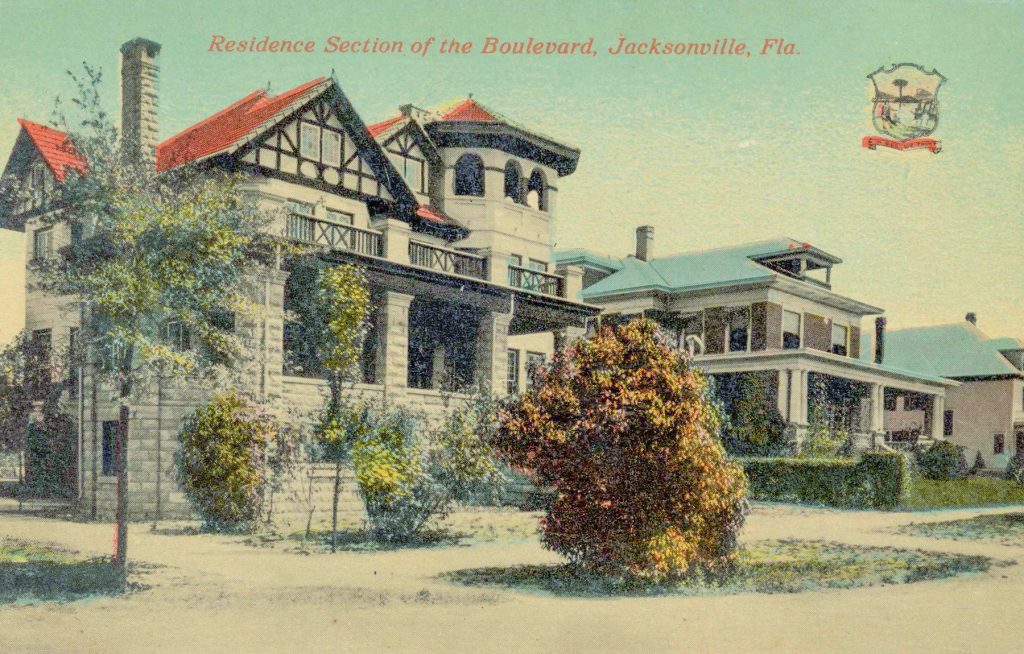
According to Wood, the house’s distinctive tower is a belvedere – Italian for “beautiful view” – one of the very few in Florida. From this open structure, Drew would have enjoyed a sweeping view of Springfield Park, the downtown skyline and the river beyond.
Wood also makes note of the structure’s “inventive” use of a combination of smooth and ashlar-finished concrete blocks. According to archaeologist and Springfield resident Jeff Gardner, many homes built in Jacksonville during that era used locally-manufactured concrete blocks produced just north of Springfield.
“[The home is] basically a frame structure – the concrete blocks are actually a veneer. It makes the building look more substantial,” said Gardner.
Dr. Horace Drew
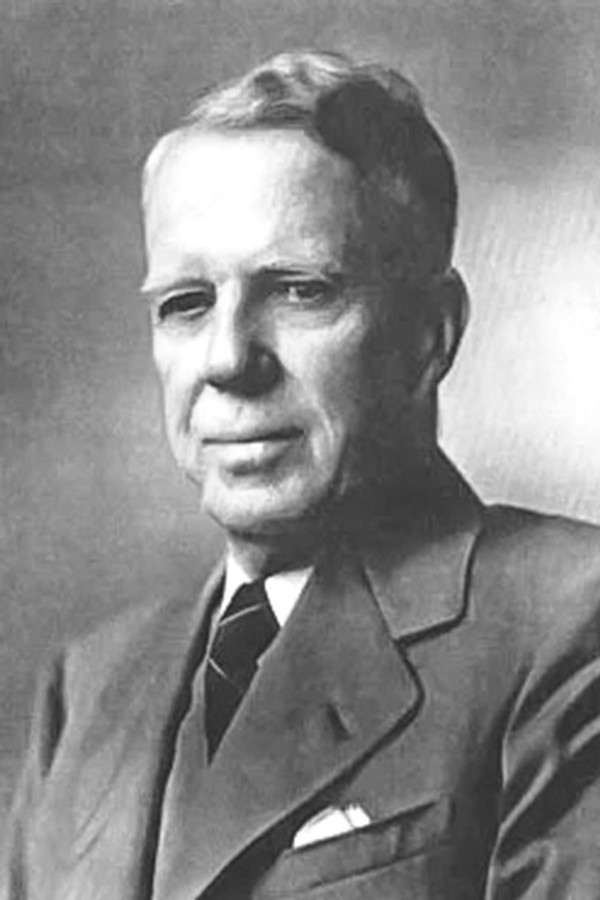
Drew, the home’s original inhabitant, was a well-known local physician. According to Gardner, newspaper accounts from the period placed him at the scene of many local accidents, where he tended to victims of car and buggy crashes.
“He’s known to have saved quite a few lives in some of these situations,” said Gardner.
Active in Jacksonville’s social scene, Drew had a billiards room in his attic where he would shoot pool with silent film actor Oliver Hardy, who moved to Jacksonville in 1913; at the time, the city was enjoying a brief run as America’s moviemaking capital. Meanwhile, in the basement, Drew’s daughter ran a citrus packing business during the 1920s until several freezes killed North Florida’s citrus industry.
A pioneering spirit, Drew also helped introduce football to Jacksonville. Years before Wayne Weaver lured the Jaguars to town, Drew, who had played college football at Sewanee in the 1890s, organized Jacksonville’s first amateur football team, which traveled as far as Savannah to play games.
Later Years
Drew passed away in 1951, and according to Leland Kent of Abandoned Southeast, the Mears family lived in the home until 1967.
In 1970, while the house was vacant, two children discovered an airtight plastic bag containing a severed human head hidden in the backyard of the property.
In a bizarre twist, the culprit turned out to be an 18-year-old orderly, who’d stolen the head from the nearby Duval Medical Center because he knew the man and wanted to keep a part of his friend. The grisly incident gave the Drew Residence an enduring reputation as a “haunted house.”
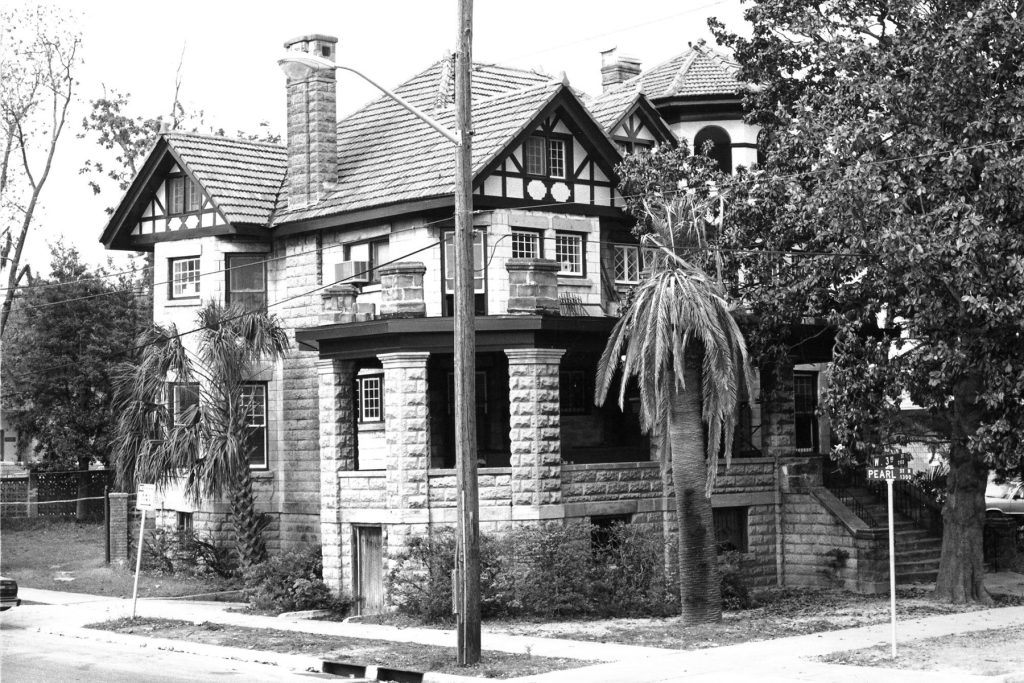
The Massey family purchased and renovated the home in 1973, occupying it until 2006, when it was abandoned due to financial hardship. Over the last 20 years, the structure gradually fell into disrepair as vandals and trespassers smashed windows and stole copper pipes. The property has cycled through owners and racked up more than $2.3 million in fines, but progress towards restoration has been minimal.
The Next Chapter
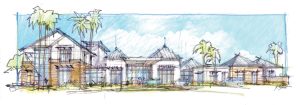
In December 2025, a deal was reached to transfer ownership of the Drew Residence to Springfield Preservation and Revitalization (SPAR) in exchange for dropping fines on the property. As a nonprofit, SPAR organizers believe they have more tools and face fewer hurdles than a for-profit owner and have unveiled plans to restore the home.
According to SPAR Executive Director Michael Haskins, work will include shoring up the foundation and exterior masonry as well as repairing floors, walls, and electrical systems on the inside, which is gutted. He hopes to complete the project in the next two years and is encouraging the community to help reach a $1.5 million fundraising goal, which he says will require a mix of grant funding and private donations.
It will be a significant project, but Gardner is hopeful. Asked what story he thinks the walls of the Drew Residence would tell if they could talk, he takes a nuanced view.
“They would tell the story of the people who lived here, but I think they would also talk about the bad times, too, being abandoned. That’s a very important part of that story,” said Gardner.
Given Drew’s long-ago efforts to save people as a doctor, it is perhaps fitting that the community is now rallying to save his former home.