

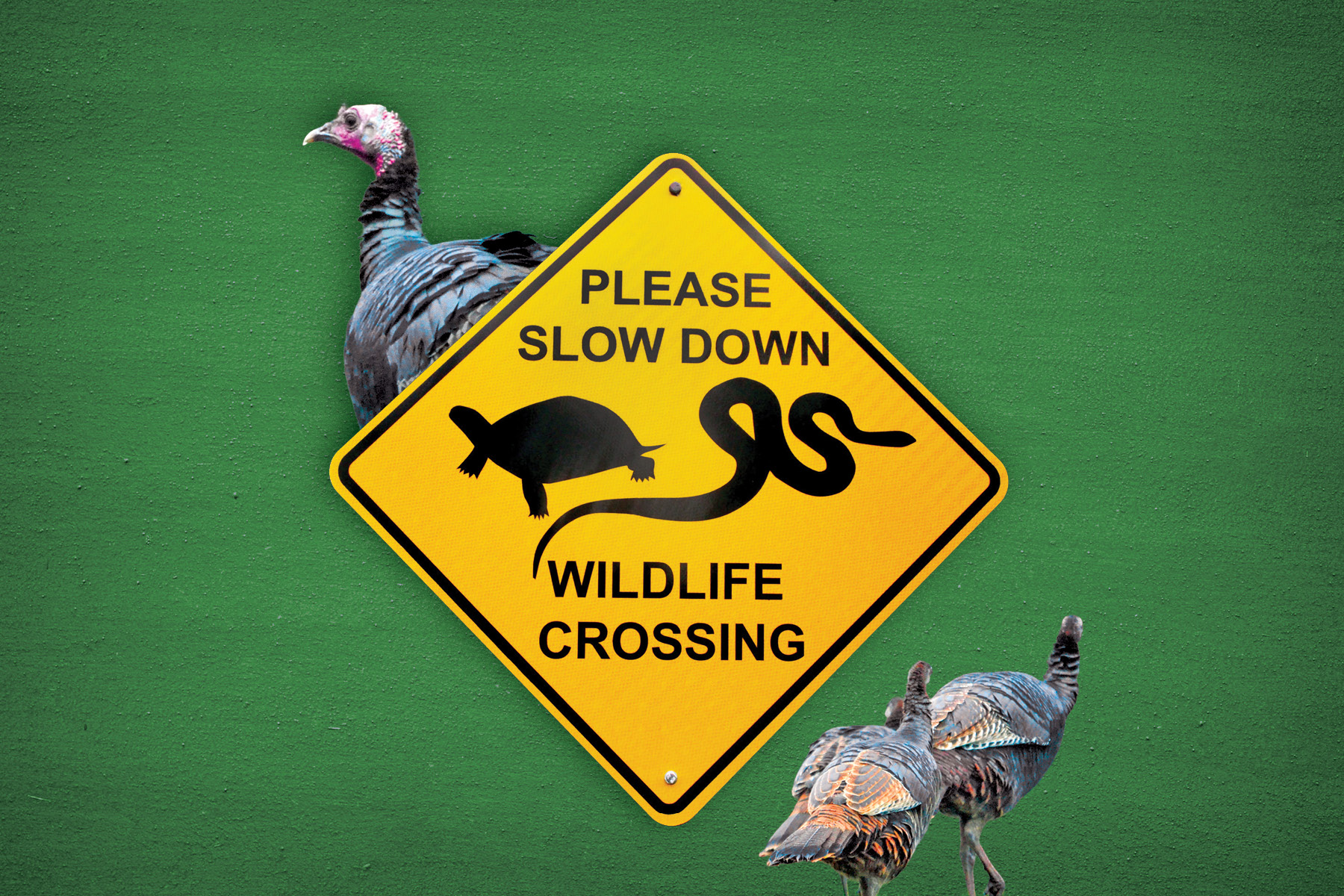
Wildlife crossings that mimic natural habitats – safe, manufactured animal passageways under or over roads – are unseen lifesavers for wild animals that might otherwise be struck by vehicles when crossing roads. Resulting collisions can injure or kill humans and wildlife alike. Pedestrians walking on foot across roads – in or outside a crosswalk – are legally protected by laws that obligate motorists to yield the right-of-way or stop and use “due care and caution” to ensure that no person is injured or killed by a vehicle. Wild animals on roads, on the other hand, are defenseless.
If drivers can see an animal on the road and it is safe, they can slow down, swerve, or stop to avoid collision. Engineered wildlife crossings, either newly designed or retrofitted passages combined with high-barrier roadway fencing or concrete walls with six-inch lips similar to those used in zoos, are far more effective than warning signs that can go unseen or ignored. According to wildlife and transportation authorities, out-of-sight crossings require no driver response and dramatically decrease vehicle-wildlife collisions by 97%.
“There was nothing there before,” Florida Department of Transportation Engineer Brent Setchell said. “It’s amazing to see how quickly wildlife have adapted to the crossings and start using them in just weeks or months.”
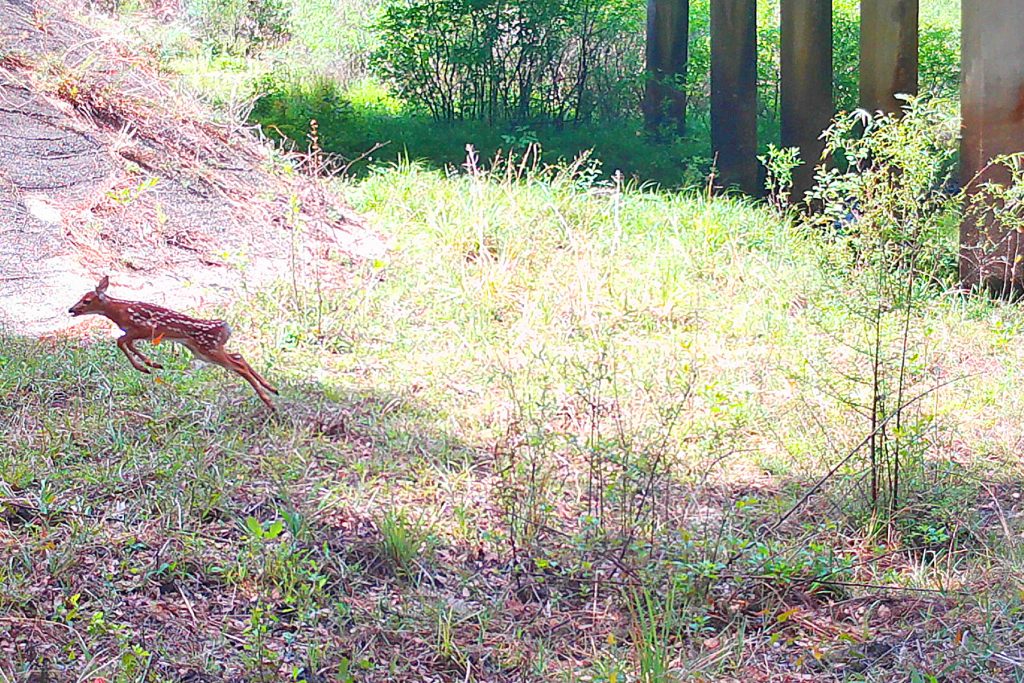
Wildlife cameras installed to document the use of these crossings have shown birds, panthers, bobcats, black bears, deer, wild hogs, turkeys, raccoons, opossums, foxes, mink, coyotes, beavers, North American river otters, American alligators, squirrels, skunks, marsh and Eastern cottontail rabbits, frogs, toads, salamanders, snakes, land and aquatic turtles, gopher tortoises, and armadillos all using these safe passageways.
FDOT is part of the nationwide movement to protect drivers and save wildlife, with more than 200 wildlife crossings completed and another 12 in development. Applications for millions of dollars in grant funds have been submitted to build more wildlife crossings in Florida, as the state ranks ninth in the U.S. for human deaths caused by wildlife-vehicle collisions.
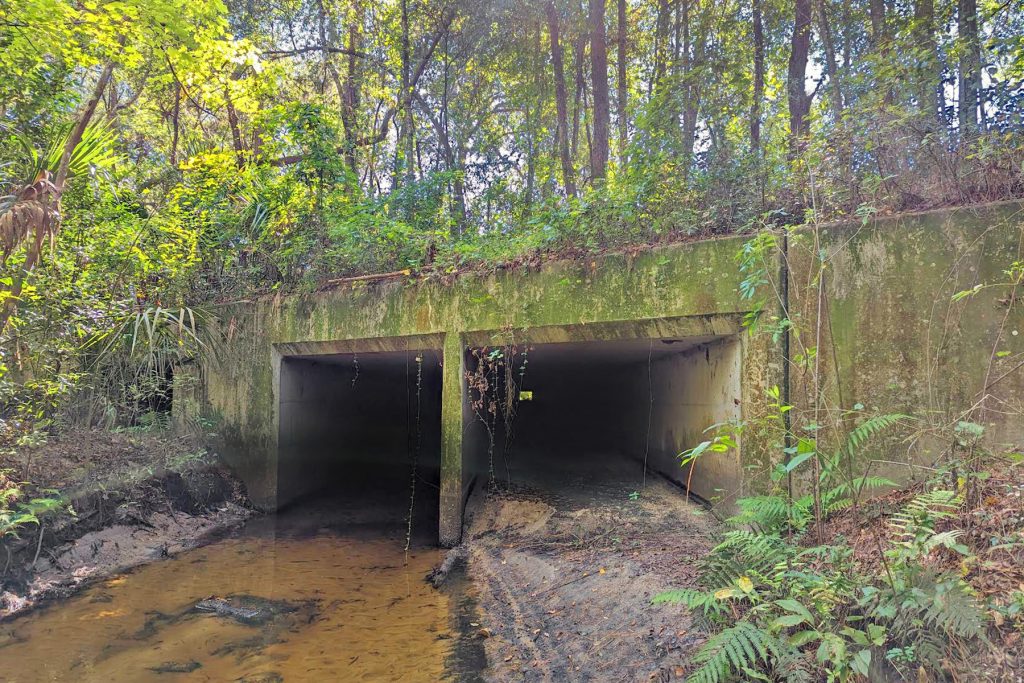
Robert “Scott” Johns, natural resources program leader for FDOT District 2 planning and environmental management office, explained that Duval County’s three wildlife crossings are located under roadways identified as wildlife hotspots with high collision and fatality statistics. Duval County’s wildlife crossings are the Gold Star Family Parkway wildlife crossing, constructed in 2020; the I-295/First Coast Expressway crossing, completed in 2017; and the I-295/Monument Road crossing, built in the 1980s.
Johns, a wildlife biologist with decades of experience, informs the public that FDOT, Florida Wildlife Conservation Commission, and U.S. Fish and Wildlife Service evaluate proposed road transportation projects in the state of Florida for potential environmental impact before approval, as required by the U.S. National Environmental Policy Act (NEP) of 1970.
This law requires environmental considerations to be part of every FDOT project to prevent ecological harm. Federally funded projects cannot significantly impact natural resources or wildlife, with special consideration given to threatened or endangered species.
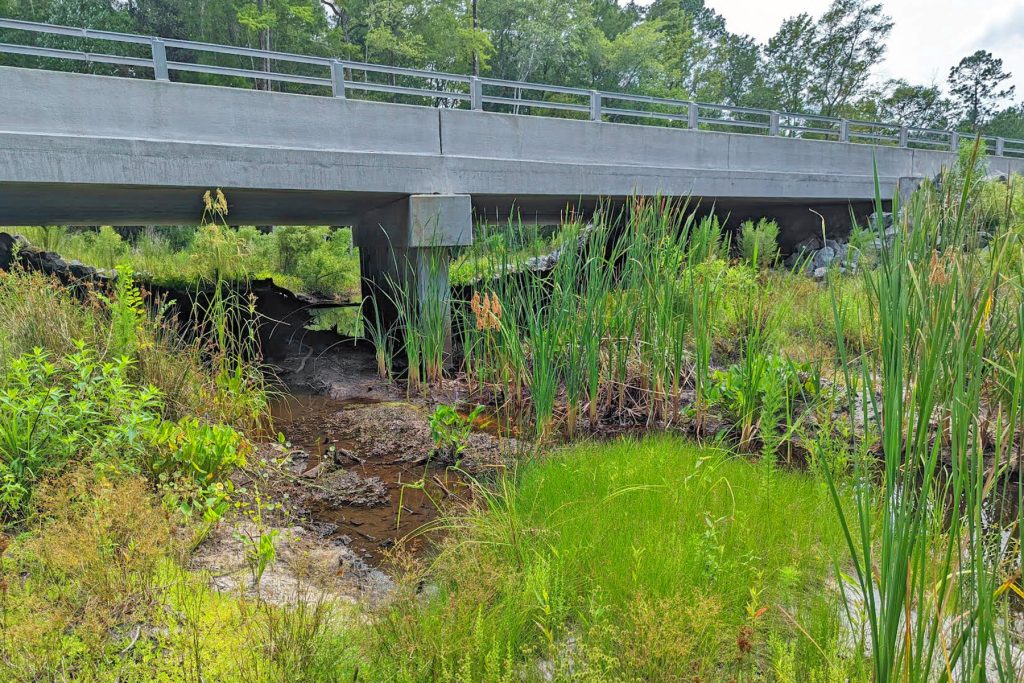
Required environmental studies for wildlife crossings identify chronically high wildlife fatality or vehicle/wildlife collision zones, biodiversity hotspots, important waterways or greenway links, rare native animal populations, and habitat types. Several designs for wildlife crossings are available for new construction or retrofitting existing Florida structures: Underpass tunnels, larger pipe culverts, and elevated, dry shelves on either side of waterways are less expensive than over-road bridges with native vegetation, but all effectively divert animals away from roads to a safe route.
Award-winning author and environmental researcher Ben Goldfarb’s latest book, “Crossings: How Road Ecology is Shaping the Future of Our Planet,” examines the new science of road ecology. Road ecology brings together biologists, ecologists, wildlife experts, engineers, and road builders to study the impact of roads and infrastructure on the environment and wildlife and find solutions for their adverse effects.
Goldfarb reports that humans have historically built roads for convenience and connection, often with little to no planning to protect land and wildlife. That, combined with modern-day exponential road-building required by residential housing demand and breakneck commercial development, is catastrophically affecting both. Goldfarb said no location in the U.S. is farther than 20 miles from a road.
During the 20th century, scientists learned that roadkill had surpassed hunting as “the leading direct human cause of vertebrate mortality on land .” Current estimates for U.S. roadway vehicle/wildlife collisions document the daily deaths of approximately one million animals. These are only the reported deaths; the actual count could be much higher.
Imagine the need to leap, walk, run, hop, slither, or crawl across a busy road or multi-lane highway during the day or night. Whether to find food, water, a safer habitat, or escape danger from fires or harsh weather, wild animals must face deadly traffic. Wildlife are instinctively compelled to migrate, mate, or establish a new territory, and they are driven to cross any roads blocking their path. The exponential growth of urban sprawl forces wildlife to travel ever-increasing distances to meet basic needs, compounding the risks.
A U.S. Forest Service report classifies some wildlife as “avoiders.” They appear to regard roads, high traffic, and loud noises as threats and exhibit avoidance behaviors that enhance their survival. Wild hogs avoid roads or reduce crossings, while deer and raccoons may pause for cars to pass. Some animals only travel at night or during the lowest traffic times.
U.S. Geological Survey researchers documented lizards and mice avoiding paved roads, turning back at the edge of pavement. Some wild animals learn caution from firsthand encounters they’ve survived or by observing and following the avoidance behavior of other animals. Avoidance actions vary widely among animals, with some moving directly into traffic or freezing in the headlights, seemingly unaware of the inevitable outcome.
Wildlife crossings reconnect wildlife habitats that have been divided or fragmented by roads, railways, or pipelines and come in all shapes and sizes. From a six-inch duct that allows reptiles and amphibians to migrate under roads to a 200-foot bridge built over 10 highway lanes, these crossings serve as vital links for wildlife survival. High-barrier fences for mammals and concrete walls with a six-inch lip at the top help stop reptiles, amphibians, or other animals from scaling or climbing the wall, guiding them onto safe passages. Even panthers and bobcats dislike the walls and choose to move along them into the open wildlife crossing.
However, as devastating as roadkill is to animal populations, species that cannot travel freely become divided and isolated. That isolation predicts a restricted gene pool, reduced reproduction, lower survival rates, and ultimately, extinction – an irreversible biodiversity loss.
Loss of biodiversity – the variety of living plants and animals – is dangerous to all species’ survival, as an estimated one million wild animals are killed annually on U.S. roads. This reality, plus the injuries and fatalities to drivers and passengers caused by wildlife/vehicle collisions and the costs of medical care, vehicle, property and infrastructure damage, all urgently highlight the need for more wildlife crossings to keep pace with road expansion.
If a community or organization wishes to request a new wildlife crossing or a roadway retrofit from FDOT, it must provide scientifically based documentation or studies to substantiate that request. Accepted requests could be funded through financial partnerships with the requesting entities, affected property owners, or other interested organizations. According to Johns, affected or adjacent property owners are consulted during the early stages of planning wildlife crossings that could impact them.
In these accepted wildlife crossing projects, regulatory agencies coordinate with the public to identify and fund right-of-way and ongoing maintenance requirements, as outlined in the FDOT Wildlife Crossing Guidelines. Complete information, photo examples and requirements for wildlife crossing projects are on the FDOT website.
Johns said the best way for citizens to advocate for a wildlife crossing at a specific location is to attend the FDOT public hearings on new projects, which are publicized and held before new roadway construction projects. These hearings provide information about the proposed project, allowing attendees to voice their concerns, questions, or requests directly to officials.
The FDOT discourages the public from using wildlife crossings for any purpose, as this can frighten away the wildlife they are designed to protect. Officials regularly review hours of wildlife camera footage to document the species and numbers of animals using the passages. That footage also shows people using the structures for activities detrimental to the passages and dangerous to wildlife.